Fast-forwarding through shows, putting books down after a few pages, losing interest when a product reaches the tedious parts. In the second half of October, I began to notice how accustomed I had become to fast feedback.
AI can deliver a result in seconds; moving to another city brings a fresh view. But some things still need to be lived through slowly. This month’s notes keep returning to attention, lived experience, and how to stay with something over time.
223 public notes this month | Recorded: 2026-10-01 — 2026-10-30
Organized by theme, with the original timestamps retained. Obvious typos and missing context have been corrected, and private or sensitive material omitted. Judgments from different dates remain in their own context.
Quick Navigation
223 notes across 9 themes:
- Self-Knowledge and Psychology · 54 entries
- AI and Agent Systems · 46 entries
- Reading, Ideas and History · 42 entries
- Product, Engineering and Open Source · 36 entries
- Content, Craft and Recording · 12 entries
- Business, Investing and Career · 12 entries
- Travel, Places and Cities · 9 entries
- Daily Notes and Everything Else · 8 entries
- Body, Health and Daily Life · 4 entries
Self-Knowledge and Psychology
54 entries I have a friend who really likes asking about other people and often asks how another friend of mine is doing. Some people seem to be like this, very interested in finding out about others. Why? Asking about other people comes back to the essence of obtaining information The essence of obtaining information is reducing uncertainty So asking about others helps reduce your own uncertainty, judge your situation and gain a sense of control over relationships by understanding other people A behavior serving your own needs does not mean it is malicious. When people care about a friend, they may also want reassurance that the relationship is still close Whenever you want to know something, observe the motive behind it. Is the starting point a good one, or? Some people want to get closer to you, some want to compare themselves with you, some want to judge whether you are reliable, some want something to talk about, and some want to find your weaknesses Whatever the case, if the other person does not want to talk, stop promptly Judge how they will use the information after learning it And whether they are honest in obtaining it I have been to Chiang Mai and seen the sky lantern and floating lantern festivals. I saw the happiness of local people, couples and families joyfully releasing sky lanterns, and solitary people releasing them full of hope and wishes I think I really understand what the sky lanterns and floating lanterns mean now, those festivals in 2024. In Grandma’s story, there are many people without a home, people longing for someone Then, seeing Xie Lanzhi release the floating lantern, it felt incredible, as though that was the moment she began to hold steadfast. I realized how deeply human it was. The lantern festivals did not touch me at the time; observing them, I just felt that people were happy and the atmosphere warm. But if I could, I would like to release one too. Longing, staying together, parting and sorrow all reside in a sky lantern or a floating lantern, carrying people’s thoughts of each other. Only after experiencing that feeling does it touch you so deeply Floating lanterns and sky lanterns carry people’s longing far away, toward the other person. The emotional distance may be great, or the physical distance may be great: a foreign land, perhaps cut off from the world, separated by life and death… What they leave is a little feeling between people, a little tenderness Always touching my heart a little at a time Qingyi is neither friendship nor romantic love. It often comes from an understanding that crosses mountains and seas. Qing means affection; yi means loyalty and solidarity. That understanding of each other makes resonance and empathy possible. In a crisis, people hold tightly together and face it together Relationships between people are like this too; they do not necessarily have to lead to an embrace. I think that in an uncertain world, on a dangerous journey, two people encouraging and standing by each other, offering understanding and kindness, is already something complete. As for love, it seems too much of a luxury I think people who have been through a few things, more or less, may come to believe in fate. Its push and pull feels so strong, and we also need fate to give us some support, some strength. We never know whether the path we have chosen is right. So it is perhaps just a little consolation through xinxue, the School of Mind. #Kurosawa-Dreams I think it symbolizes three stages. In childhood, it seems that you have little control, so you often have strange dreams. I was like this as a child too, dreaming of snakes and ants as though they were really coming to catch me. So I was very afraid of horror stories when I was little; they really worked. After growing up, it seems to be more about pain in life and work. Disappointment at work, a career that has not yet achieved anything, and frequent pain, indecision and inner conflict in the workplace. In old age, it seems to be more about reflections and philosophy concerning life and meaning: the meaning of humanity, the meaning of existence, the relationship between people and nature, people and the world, people and life, and the origin of life A long time ago, I could not sleep one night, and a sentence popped into my head: I am so anxious Then things changed. I began worrying about why I was anxious, whether anxiety would affect tomorrow, whether I had been doing badly lately… One word dragged the whole night into it What would happen if I did not call it anxiety? If I just described the present? My chest is a little tight. My breathing is shallow. A thought about tomorrow’s meeting keeps coming up, repeatedly asking what would happen if I made a fool of myself Just these three things. Once I said them, they became smaller instead. If my chest is tight, take a few deep breaths. Write the thought down and leave it until tomorrow morning. This process is seeing rather than defining. Often, many emotions only need to be seen and written down clearly; looking at them after some time, they resolve themselves Psychology has research on affect labeling. A 2007 experiment
found reduced responses in some brain regions when participants named emotions in negative images. That gives me one way to understand my experience, but does not mean every emotion will resolve simply by being put into words. Zhuangzi says to forget the fish trap once you have caught the fish. A name is the tool for catching fish, not the fish itself. Buddhism also says that what we call “I am very anxious,” broken down, is merely some sensations and thoughts coming together at this moment and dispersing in the next My method is that when I notice an emotion, good or negative, my first reaction is anticipation, because emotions help me understand myself. Every moment of being moved, disappointed or anxious seems to help me grow if I see it Then reconstruct the emotion: what exactly happened in this moment? The holiday is almost over; I went to a café today, but I feel busy every day. When I think back through the day’s timeline, I can clearly tell where I was at each point and what I was doing. But when I look back over my day and try to summarize what I did today, I get a little stuck It seems I did a lot, learned a lot, and solved a lot of problems. But looking back now, it feels as though I did nothing today A day of busyness with nothing to show for it I suddenly realized that Jobs, Musk, and the other familiar founders in technology must have incredibly busy working days. Jobs would practice time management or energy management. There are all sorts of methods and tools for managing time and energy online too. But in actual practice, I still find it troublesome, because management itself is a burden. If, during the day, I also have to think about how to list my itinerary and how to arrange my plans, that behavior itself consumes energy Then I suddenly thought of Eason. In managing his daily life, he uses a really brilliant word, a really brilliant concept: bottleneck. It is a word you can keep thinking about. You can ask: what is the bottleneck? What is the bottleneck in the thing you are trying to do right now? It is very clear, a very specific thing and a very specific intention. Concepts are also the basic units of thought, so every day you can think outward from this concept and work around it. Then each day has a clear main thread. It is not sprawling or fragmented; it is one clear thread: solving the bottleneck in the thing you are working on now, and thinking about how to solve it. What methods do you use in the process? You focus all your attention, energy, learning and time on this concept And a bottleneck is something you can keep thinking about. Once you solve the current bottleneck, you can keep asking: what is the next bottleneck? What is the next bottleneck? I have suddenly had a realization. I think that in the future AI era, when facing complex tasks and events, especially as an individual who has a lot of work to do, the bottleneck is a very good method. It is more effective than all those energy management methods, time management methods and task lists. Every day you need to think clearly and define clearly: what is the current problem? What is the most central bottleneck? Keep thinking about and solving things around that bottleneck. Then every day you can clearly say what you did to address it Continuing the previous note, I think the bottleneck solves another important problem: protecting your attention, time and energy for the single most important, most important thing When there are too many things in everyday life, they really scatter your time and energy, until it feels as though you are forced to divide them just to solve or finish various tasks. A bottleneck forces you to hold all your time and energy in your own hands, actively and selectively allocating them to the biggest and most important problem. Then you can put all your energy into this one thing for now, without cognitive or energy overload For example, at my current stage, I would focus on the most central thing: whether the current evaluation or agent performance has been tuned well enough. If the Agent performs poorly, the central analysis is why. What is the bottleneck? Is it an architecture problem? A problem in the current Workflow? Or have some tools not been configured properly? Growing up, I kept moving home during urbanization: primary school in a town, middle school in another town, high school in the city, and university in the provincial capital Through this process, I gradually developed the habit of being able to leave whenever I want. Whether moving home, changing jobs or changing my way of life, living abroad for a while or traveling, I can just go. A major benefit is that I do not hoard things, do not have a desire to consume, and do not buy too many collectibles. When buying things, I try to keep them simple and avoid excessive complexity, attempting to create a rich life through the simplest, most minimal way of living It seems to be the same in my daily life. It affects my habits of thought: when making decisions, I do not let outside material factors influence or interfere. Instead, I try to find the most fundamental variables in the decision. I do not let excessive concern over things that have not happened, worry that I might not adapt, or worry about how complex the real world is obstruct my courage to make decisions and move forward. So minimalism has actually given me more choices I keep wondering whether the world we live in is real. It seems that ever since we came into the picture, our world has changed incredibly fast. Starting in childhood, electricity and running water arrived one after another. Later we had airplanes, the internet, and smartphones, and now artificial intelligence has appeared. Perhaps in another 10 years, we really will enter a virtual world and experience an immersive life, like in The Matrix. As world models develop and evolve, and 3D, VR and AR mature, we really may reach that point Nintendo games are similar: millions of players immerse themselves in them, essentially participating in a lightweight simulation. Super Mario runs across the screen; his world may not exist in its entirety, but it takes effect as he moves forward. The space behind a wall is simulated only when you walk behind it. It is like our world now, extending onward with time as a variable, gradually revealing new views Perhaps we are living in a simulated world like this. This world might be false, yet the world as we see it might be real. Looking at it this way seems to dissolve many of life’s pressures. The world is a simulated game, so what we can do is live earnestly within it, recognize what belongs to fate, and avoid becoming too tense. When a challenge comes, treat it as a level and concentrate on finding a solution! It really brings a great sense of ease. Live earnestly, love your work passionately, and do not take yourself too seriously Every time, I do not want to look at those calendars I scheduled earlier Each stage has its own problems. For me, setting calendar recurrences is acceptable only by month or year, by weeks with a defined lifespan, or by days with an extremely short lifespan Do not waste anyone’s time or energy Treasure your own time, every moment You are free Have the courage to say no Have the courage to refuse If a message will do, never call; if a call will do, never meet in person If it can be left undone, leave it undone First, how should we understand abstraction in the AI era? AI is very good at abstraction and summarization, so we can use it to do many things, such as building various systems and frameworks. But the problem that follows is that understanding these abstractions is actually very difficult for us For example, AI can help us build a distributed system, or a guide to life. But it is too abstract, too grand. We see a familiar concept, yet it also feels unfamiliar, because we do not have a history of development or experience, or concrete material of different kinds, to provide a situational and spatial understanding of the concept The question that follows is: how should we understand this abstract concept? My method is to dig all the way to the bottom of every abstract concept. When we write, we try to express things abstractly; but when we dig, we must take the abstract down to something very, very concrete For example, if a concept is very abstract and I do not understand it, I peel it back layer by layer and keep digging: to the next layer, then the next, then the next, until it is extremely concrete, until I can understand the scenario very clearly and model it using a wealth of past experience. I think that is when I have reached the bottom Acknowledging discomfort can coexist with accepting criticism The essence of acting is forgetting yourself, including your own emotions. In that moment you become the character, with the character’s emotional changes So to enter a role, you need to enter the character’s situation, but some people may hide their own selves so earnestly that they believe their performance, overlooking the difference between their emotions in the moment and their own feelings All of a person’s social attributes are essentially roles, each with its own limited strengths and weaknesses, but the self has no role Sartre: To believe is to know you believe, and to know you believe is not to believe” To believe is to know you believe, and to know you believe is not to believe. Essentially, this discusses the relationship between belief, self-awareness and existentialism Belief itself is a paradox: once belief becomes conscious, self-reflection strips it of absoluteness. True belief can only be the attitude of unconsciously throwing myself into the world wholeheartedly, rather than a proposition that is labeled and examined But if we become aware of it or know it, we lose the sense of certainty. What do we do then??? Seeing mountains as mountains, seeing mountains as not mountains, seeing mountains as mountains again When we see the essence clearly and observe ourselves, we are less immersed. It is like observing the whole process of being in love: the observer’s perspective and the experiencer’s perspective sometimes interrupt each other, but they may still be able to coexist. But even knowing that we believe, and seeing the essence of love clearly, does not logically overturn the fact of being in love I remember that some friends were chosen by religion, some left after seeing religion and their own feelings, and others remained immersed in it For the third group, perhaps this is the stage of seeing mountains as mountains again. They place religious belief within the tension between objective uncertainty and inward commitment. Knowledge has not eliminated risk completely, and faith may still hold. They treat love and friendship in the same way They know that friendship, marriage or work offers no guarantee of an outcome, yet can still take responsibility for a choice Believing and choosing are two different things Maternal love is a typical example too. From my perspective as someone born in the 2000s, my mother’s generation has given selflessly to me. Such giving will leave me feeling guilty all my life. In fact, my mother sacrificed her own self for the identity of mother I think of a friend who openly acknowledges her feelings. I really admire that sense of agency. I will not go into her private experiences here. What it makes me wonder is whether, once we enter an identity or follow a set of rules, we are still willing to express our feelings honestly. A person can be a student, a friend, and take on many other social roles, but those roles cannot make every choice for them. Keeping some agency of our own within a finite game feels precious to me. Many fathers and mothers are called selfish as soon as they think of themselves As soon as they stop sacrificing, they are considered not to love their children enough. In this way, the identity of “mother” fills her entire being, while her own needs are not given an equal place in consideration Society is defined by boundaries; culture is defined by horizons All the different laws and constraints within society Culture has no boundaries; it lets humanity adapt to a world that keeps changing Looking is recognizing an object; seeing is noticing how you recognize it Looking means identifying things through a familiar framework, such as looking at Mom through her role as a mother Seeing means noticing that I use a role to understand her, while that role cannot represent all of her. So seeing includes awareness of the framework through which I look: a kind of metacognition, an observation of observation The distinction corresponds to look and see As the geniuses we are, we do not look but see. Nothing in this world comes with 100% certainty Xu Xiaoman is very mature for her age. She sees problems and understands them thoroughly She can understand a person and dare to point out their blind spots She knows very well how to get by in society, yet it takes her a long time to recognize whom she really needs, what kind of person She is capable, has real feelings, and has an urge to reshape the person she loves. She also has very clear judgments and understanding of the world and the people around her But this also makes it easy for her to demand of her partner: you should change the way I want you to. She knows he is capable, and that understanding a little of how people and society work could spare him many setbacks. So when she sees him repeatedly refuse, she becomes anxious and disappointed But for him, this may involve self-respect and freedom. It is very hard to change someone ourselves; we can only guide them and stay beside them. For a person to really change, they still need to experience life, choose and grow for themselves Xu Xiaoman’s contradiction is that she is drawn to Liang Zhiyuan’s integrity and authenticity, while also hoping those qualities will not get in the way of their having a good life I think long-term relationships are very difficult. There are so, so many factors to consider. Even if they later have regrets, it is more like an idealized love that never came to be: they never really got together or shared a life. She is certainly intelligent, but… From what I have observed, people like this generally have a fascination with one field that borders on obsession, putting in far more time than most: a rage to master And I have found that not everything they produce is outstanding. It is not that being a genius means you produce great work; it is that producing a great deal means you create both plenty of good work and plenty of bad work. Quality emerges through quantity And they can endure solitude and being misunderstood Sometimes we think we have understood, learned, grasped something, when it is still only a vague signal. Each time, we can go one step further: what can I actually do? In the AI era, especially when agents can help us finish tasks or even create complete works, this only proves that we completed the task with their help. To judge which of our own abilities improved, we need to remember exactly where that help came in Many people approach love as a finite game. East Asian culture also treats love this way, mistaking the establishment of a relationship for a permanent identity. Especially in modern society, love is highly structured, with a series of milestones: a crush, a confession, becoming a couple, moving in together, getting engaged, getting married It seems to have become part of East Asian culture: proceeding step by step toward an endpoint, on a journey that can be judged a success or failure. Even our phrases suggest it: “reaching fruition,” “ending as well as it began” But I think the essence of love should be closer to an infinite game By the definition in Finite and Infinite Games, an infinite game is played to keep the game going. Rules can change, the framework can change; the purpose is continuation itself So winning someone’s heart does not mean you have won. An argument does not have to produce a winner and loser, and marriage does not have to be the finish line. In a relationship, keeping score of who gives more or less, who loses more or less, makes it meaningless But placing it within an infinite game makes the game itself interesting: both people keep growing. You argue to let the relationship continue and work in a healthy, better way, rather than to defeat the other person The rules keep being redefined as the two people change. They are not pursuing an endpoint, nor are they held by past sunk costs, such as “a ten-year relationship.” Sunk costs do not enter the decision Although this is an idealized concept, I think the most moving moments in love are when two people keep growing and being seen, changing the rules together, writing their shared story and experiencing life! I find this idea of a small ego interesting. Generally, the more successful someone is, the larger their ego may become, because they think they are right. They won in this version of the game, so their position determines their thinking: I am right, and everyone else should follow my rules. But the world changes dynamically, doesn’t it? When the next version arrives, that oversized ego may affect their ability to adapt to the times. Every version has its best way of playing, right? Following that approach may let you do very well within that version. We can understand this way of playing as a cognitive system, or a constellation of knowledge. By unlocking things, continually absorbing new information and accepting feedback from outside, we arrive at a way to play that works. That is one path through the new version. Looking at literature and martial arts through finite and infinite games. The old saying goes, “No one comes first in literature; no one settles for second in martial arts.” This is because culture has no boundaries: art, philosophy and poetry expand outward without limits. Martial competition does have boundaries; it takes place within a framework. I suddenly thought of that saying: no one comes first in literature; no one settles for second in martial arts. From the perspective of learning, neither literature nor martial arts has a first place, because martial skills can also be continually refined. As a process of growth, with no imposed limit, it can keep developing without boundaries. From the perspective of an examination, though, both have boundaries. An examination implies rules, and rules naturally create limits. Even the famous Nobel Prizes work this way: once something is established as an award, it must start with criteria for judging it. Awards have historical contexts and specific selection rules. The absence of a Nobel Prize in mathematics does not imply that mathematics is less connected with reality than other disciplines This leads me to another thought. Most workplaces have boundaries, and people treat them as finite games. What about life? Many people still treat life as a finite game, completing certain things in stages. But I think life is an infinite game, as are marriage and growth. Seen this way, every level, every obstacle, every reward you receive and every return society gives you is temporary. What they ultimately serve is a self without boundaries behind it all, looking at everything and playing the game. While scrolling through social media, I notice how easily appearance seems to attract an initial response. But that is only an impression from the examples I happened to see. It cannot become a rule that women have it easy and men have no reason to bother. Platforms, audiences and content differ. The more useful questions for me are whom I want to reach and what I have to keep expressing beyond that first glance. I suddenly thought of Justin Sun’s podcast yesterday, when Alan asked him: do you think life has meaning? I found his answer interesting. First, he said he still sees the world as a game. Seeing the world as a game suggests an attitude centered on experience. That attitude shapes what lies behind each action and drives him to do things: he really treats the world as a game and himself as a player, trying to experience as much as possible. He also said that before turning 50, he wants to feel, go through things and experience as much as possible. He will leave the question of meaning until after 50 and explore it slowly then. Meaning seems to be something each person, or humanity itself, seeks without finding throughout the whole journey of life. Perhaps it is a consolation: in each stage, finding that stage’s lack and temporarily filling it or setting it aside. Yet the lack remains. No theory, nothing humanity has created, can turn around and explain the meaning of human existence. It is a paradox. But I think his way of facing it is to set it aside for now, experience life first, then continue experiencing after 50 and share some impressions. Putting it off seems a reasonable approach to me Then I thought again about freedom and money. Do you earn money first and then gain freedom, or gain freedom first and then become able to earn money? I found Justin Sun’s answer interesting. He said you should seek freedom first, because the world has so many opportunities now. You should not limit your vision to your own small patch of ground or your own doorstep, to things such as civil service or graduate entrance exams. Widen your view to the whole world, see where the opportunities are, and try something there Of course, the freedom he meant may have been freedom in the ordinary, practical sense: being able to live as you wish. Then I realized that my earlier thinking was similar: before earning money, you should first make sure you are free. This can also mean freedom of mind. When your attitude toward the world changes, when you see everything as an infinite game, you find that you are trying to keep the game going. But if you treat the world as a finite game, set earning money as the goal and work to complete it, it becomes a finite game. You may suffer a lot in the process and find that many things fail to match your wishes, that what you imagine is out of alignment with the world. Could we adjust our inner view of the world, or our view of ourselves? Let ourselves be free first, inwardly free. Open the mind and see the world as a place to play and practice. Then we can naturally accept every possibility and accept the world. Life becomes an infinite game. At that point, perhaps we can view temporary gains and losses more calmly I wonder when I began to realize this. Perhaps recently, with information exploding and technologies such as AI appearing so frequently, there seem to be so many questions about humans and AI. I used to have no way of locating myself in this era, especially when I was accustomed to measuring everything by material things and results. We have not found a very good framework or system for resolving some of the difficult problems in daily life, work or life as a whole, problems for which the present material world offers no solution And this system should be coherent enough, going beyond earlier systems such as Buddhism: simpler, more practical, applicable to every part of life. It also involves a combination of many abilities, ultimately serving the purpose of letting us restart the world Beyond feeling internally coherent, I still want to seek real freedom. Coherence means the explanations I currently hold are compatible with one another and help me understand my situation. But a set of explanations may simply help me adapt to existing demands, without asking whether those demands deserve acceptance. To me, freedom also means being willing to revisit the premises, admit that the old explanation no longer suffices, and choose again. This way of understanding things is still just an attempt of my own. I want to try it in daily life, see whether it helps in specific situations, and keep revising it. My own “Sun studies” framework suddenly makes more sense to me—haha. The purpose of an infinite game is to keep playing it. Another prerequisite, then, is that the player’s value system serves the continued operation of that system, even when doing so may cost the player some of their interests An infinite game cannot be played alone; it may involve many people playing with you. Since it is a shared undertaking, you need to find ways to make the pie bigger. This can reduce some conflicts, but does not guarantee agreement. For example, if you see marriage as an infinite game rather than a finite one, you see yourself and the other person as creating and contributing together. You sacrifice a little to help the relationship keep working a little longer. But if you treat it as a finite game, you may think: when the deadline arrives, or if I have given more in this relationship, perhaps I will end up the loser. An infinite game does not focus on winning and losing. It focuses on creating together, mutual benefit and shared participation Continuing a relationship still requires both people’s willingness, and room to refuse and leave. An infinite game cannot be a reason to demand that one person keep sacrificing. But will you give up? No You need to find yourself, and you will I see you Struggle Injustice Deception Fear Lies My biggest question about having children now is: is this a relationship I truly want to build, or am I completing a life task others expect of me? I do not want to treat a child as either an asset or a consumable, nor do I think passing on my genes is, in itself, a reason I must have children. I would rather live my own life attentively, not miss the people I meet, and leave some room to enjoy living. On the other hand, being willing to accompany someone as they grow, watching them become themselves, could indeed be a precious relationship. The cost is great, and the returns cannot be calculated in advance. I can respect that choice while admitting that I do not yet want to make it myself. Looking means looking within limits Seeing means looking at the limits themselves “I see you” means I see not only you, but also myself looking at you Meta-observation, metacognition A remark about not wasting time made me think that what I really need to understand is what I am doing with each stretch of time, and whether I actively chose it. Simply watching them and following along can naturally bring changes in ourselves Viewed as a script, my birth is an event of reproduction whose plot has already been set. I am born a member of my family and my culture. The content and character of the tradition in which I find myself already provide a ready-made answer to “Who am I?” Viewed as an unfolding story, my birth is a break in the reproductive sequence, an event that will, of course, change what the past means. In this case, a tradition’s character is determined by the question “Who am I?” From the perspective of an unfolding story, every birth is the birth of a genius The same goes for fate Freud’s Civilization and Its Discontents: civilization has not cured human failure; it is built upon repression, sacrifice and discontent Humans have instinctual drives, especially sexual and aggressive ones. For people to live together, civilization must repress and sublimate these drives into laws, etiquette, work and art. The price is persistent tension and guilt. So as civilization develops, human discontent often does not disappear; it may emerge in another form Early civilization primarily repressed aggression and sexuality Freud believed everyone has an inner disciplinarian, which he called the superego. It is the voice taught by parents and society from childhood: “You should…” “You must not…” That voice used to concern itself mainly with two things: do not hit people, and do not behave recklessly. Without police or law, those were the things most likely to destroy life together, so people had to restrain themselves Today, laws and institutions also constrain behavior, but this does not mean aggression and desire no longer need self-regulation. What follows is more my own association with contemporary life: the disciplinarian has not lost its job; it has found a new set of things to police. Are you earning enough? Are you attractive enough? Are you successful enough? How do you compare with others? The feeling of lack persists, surfacing in new ways I take the long view. In many matters of life and work, I am willing to let others have more of the benefit, with the aim of growing something or a relationship I can give up some benefit The purpose is to build more friendships and relationships But the prerequisite is some understanding and judgment of the other person If someone is malicious or greedy to begin with Conceding benefits only amplifies what is bad in them The first part is vision, human instinct The second is a boundary In the book Finite and Infinite Games Finite games take place within a framework. Most people think about what they want and how to get it Infinite games are not constrained by the framework, or treat the framework itself as part of the game, bringing its boundaries into play too. The question is more about how to keep playing for longer People who have gained some understanding of life and cherish it are often better at considering the second half of that sentence. Boundaries are hard to grasp When someone starts bluffing, it means the hand they are holding has already become pretty bad Work, life, study, reading And actively create an environment that brings everyone back to the process Enduring for long-term goals, while also being strongly driven by immediate excitement, competitiveness and the desire for control Cooking, enjoying food and joking around all bring happiness Two years of living in different places, remote work, entrepreneurship, working on AI, frequently moving between cities and countries It feels as though my brain has been trained: AI produces results in seconds, the next city offers new scenery, and at work I can switch tasks whenever I want Fast-forwarding shows, stopping after a few pages of a book, losing motivation after working on a product for a while It feels as though my brain has been trained on rapid feedback and cannot sit still with things that respond slowly: long shows, thick books, a product reaching its dull parts Of course, this is not a call to escape the fast pace, nor can we escape it. This is how the world works But perhaps each of us should ask: amid this fast pace, is there something we deliberately train, deliberately observe, deliberately slow down for over the long term, something we are willing to do slowly? It could be something tiny, such as reading or taking a walk… Freedom comes at a price… I remember watching people worship around temples. Something I found interesting when traveling was that many children also worshipped around the temples. They were moving clockwise. You could see many children going in the same direction, making repeated bows and prostrations too I felt a little struck by it. These children looked less than 10 years old. Did they have freedom? A choice? Why did they believe? Why were they doing this? Had they actively chosen it? It seemed unlikely. At that age they were not adults, and might not yet have fully compared different choices. It seemed to come from having grown up there. That may have influenced their choices at the time, but I cannot judge from an outside observation alone whether they were willing or how they understood faith As for me, I have been rebellious since childhood. Where I come from, we have beliefs too, but perhaps not Buddhism. We tend to believe in our ancestors. Each time, we bow to them and ask for their protection In fact, these practices address the same problem, a problem of the mind: finding an external medium through which to see our own inner difficulties. Whether the original problem is between ourselves and others, ourselves and the world, or ourselves and ourselves, it can be transformed into a problem between ourselves and the object of worship. The latter is easier to find answers to, with its metaphysics, teachings and psychological insights Later I rarely worshipped, because to me it seemed like only a possibility. To a materialist, these things felt insubstantial, so worshipping seemed pointless This was also because, when I was young, someone bore things for me. When I encountered a problem, my parents sheltered me; at school, teachers solved problems for me. My age also seemed to bring considerable tolerance from society But as we grow older, especially when facing birth, aging, illness and death, separation, life’s many complicated details, and things beyond what we can bear psychologically, there is so much we seek without receiving, so many desires we cannot eliminate, so many regrets that time cannot wear away After graduation, as I began living in different places, my heart and worldview gradually grew broader, and I could tolerate more. Even with some extreme events, I believe I could face them calmly, because I have frameworks inside, things at a higher level that can guide me in working through them Yet sometimes, watching the world, I still see so many things that fail to turn out as people wish. For each individual, these disappointments may be very heavy During the lantern festivals, the whole city is lively. Everyone hangs sky lanterns and releases floating lanterns. But behind each lantern there may be something very heavy: two people separated forever, the loss of a child, a lantern bearing a little blessing alongside a deeply weighted hope… Then I return to an earlier question: because a place has so much suffering, those born there may come to have faith Most of the problems faith addresses concern suffering. People hope to ease it, to suffer a little less psychologically. Although suffering in reality remains, we know the world is also a projection of our inner selves. If the suffering within us is eased, we can naturally gather the courage to face the world Looking back from this perspective at those whose place chose for them from the beginning, I cannot declare them happy or unhappy. But perhaps many of us are unfortunate in this world. We all feel a lack, have desires, hope to become better and want a good identity. At least in the environments I have encountered, this feeling often appears. Everyone wonders: in which city does my identity belong? In which country? And by what means can I gain a certain social standing? We all feel lack and discontent. That lack and discontent, and the mismatch between what we seek and what reality gives us, in turn shape our cultures, societies and beliefs … Walking along, I suddenly had a thought. I recalled human history, all the love and hatred we have written about Liking begins with laying down opposition and becoming receptive This includes relationships between different cultures. Many people become antagonistic because their own cultural circle is currently in friction with another They then attach deeply prejudiced labels to the other side. But if we retain our knowledge of history while also looking at particular people and lives from other perspectives, we find details worth learning from in the lives we encounter: punctuality, cleanliness and order, anime culture, the pursuit of an inner life, explorations of aesthetics Gradually we begin learning from them sincerely, and grow through it When a friend’s mood is off, I like to reconstruct what happened To restore their situation as fully as possible and analyze the problem But later I found that, despite all the analysis, the facts about what the other person thought had not increased. Sometimes people keep analyzing because it lets them temporarily postpone asking the other person, making a decision, or accepting that there is no answer Whenever we record something or ask AI, stop and ask: what new thing did this conversation teach me? Or did it simply make me more confident in my original guesses… Most of the time, people are performingA friend who really likes asking about other people
I have been to Chiang Mai and seen the sky lantern and floating lantern festivals
In Chaoshan, there is a very resilient bond between people: qingyi
Perhaps people who have been through a few things come to believe in fate
Kurosawa’s Dreams: I think it symbolizes three stages
Anxiety is the same
The holiday is almost over; I went to a café today, but I feel busy every day
Continuing the previous note, I think the bottleneck solves another important problem
Observing myself, minimalism seems to have helped me greatly
A simulated world as a metaphor for living
Setting recurring calendar rules goes against human nature and constrains people
Express yourself accurately
I have a way of thinking that I find very effective and never tire of using
Acknowledging discomfort can coexist with accepting criticism
The essence of acting is forgetting yourself, including your own emotions
All of a person’s social attributes are essentially roles
Can we stay immersed while knowing that we believe?
Keeping a sense of agency within a role
Very ironic
Society is defined by boundaries; culture by horizons
Chai Jing’s Seeing, a book I really like
If a plan has a 70% chance of working, go ahead and do it
Xu Xiaoman’s understanding and her urge to change the other person
Genius does not happen all at once either
Sometimes we think we have understood, learned, grasped something
Many people approach love as a finite game, including in East Asian culture
Past successes can trap us too
Looking at literature and martial arts through finite and infinite games
A contest ends; improvement can continue
This leads me to another thought: most workplaces have boundaries
What is there beyond the first round of feedback?
I suddenly thought of Justin Sun’s podcast yesterday, when Alan asked him a question
Then I thought again about freedom and money
I wonder when I began to realize this. Perhaps recently, amid the flood of information
Beyond inner coherence, I still want freedom
The purpose of an infinite game is to keep playing
Because the world itself is so hard
There is too much suffering in this world
Having children: my choice or others’ expectations
Looking and seeing
Is my time part of my own choices?
Often, we do not need to discuss life’s philosophy and growth with another person
Birth enters a tradition and brings new possibilities
Freud’s Civilization and Its Discontents: civilization has not cured human failure
I take the long view in many matters of life and work
To gain something, you must lose something
When someone starts bluffing
Enjoy life, enjoy everything
A little too eager for results
Freedom comes at a price
Faith, suffering and room within the heart
Walking along, I suddenly thought about human history
More analysis does not mean more information
Most of the time, people are performing
AI and Agent Systems
46 entries unit test, integration test, e2e test, ui test, agent testing, regression test Regression testing is a purpose of testing: rerun the tests from the past to ensure that existing functionality has not been broken agent testing tests an AI agent. Prepare an Eval set and score it using rules or another model, an llm as judge How do you prove the code is correct? Eval / test-driven development: the most important thing is to define success criteria and constraints first There must be regression tests, or an agent may introduce new bugs while fixing one Testing AI relies on Eval Separate the model that changes the code from the model that scores it The testing standards themselves are a barrier. The standards and data are uniquely yours …. the most precious things I saw a case of using Codex to help accountants prepare tax returns and noted the evaluation loop worth learning from. I could not find a first-hand source to check the original sample size and accuracy figure, so I am not treating those numbers as a conclusion. The agent can keep improving itself based on the mistakes it has made Every time an accountant corrects a field the agent filled in incorrectly, that correction is recorded When the same kind of mistake recurs, it is distilled into a specific problem and turned into a set of targeted tests (evals) Have Codex inspect the code and determine which step went wrong: failing to extract information, incorrect mapping, choosing the wrong source file, or a problem with the scoring rules themselves. Then make the fix After the fix, rerun the targeted tests and regression tests (to make sure the parts that worked before have not been broken). Once they pass, submit a PR for a person to review and merge What this person called an evaluation harness plus self improvement means reproducing this loop within your own project If the fixer can see how the grader scores, or even change the grader, it may learn to game the system The rules should define how people use it, and how agents modify and write it The more often people need to read and maintain a piece of information, the more carefully AI needs to adjust it Can batch-generated work really beat something someone else has carefully refined for a particular feature? Focus on that feeling of growing together with AI User stories should be connected to evaluation and managed together User stories have two layers. The first is raw material, with as little friction as possible notion should only store content that will be referenced repeatedly, so what is truly valuable maybe is: User stories: things that really happened, valid scenarios, high-value scenarios. These can be reused for the website, the core flow, tests, and stories The evidence layer: Eval, logs Design: Figma is generally enough Decisions: usually record what was chosen, why it was chosen, and under what conditions to overturn it (responsible for maintaining the agent system) Two layers. The first is raw material, with as little friction as possible: user interviews, screenshots of group chats, moments when I get stuck using the product, and screen recordings. Throw them all into a raw material area first, simply labeled with the date and source The second is distillation. Each week, pick recurring stories from the material and make each one a row in the database, with the type set to “User story.” Use four fixed sections in the body: who, in what situation, what they want to accomplish, and where they are stuck now. Always attach a link to the original material at the end Then comes evaluation, which is actually related to the second layer of user stories Every valid user story corresponds to a set of eval cases. The story describes “what the user wants”; the cases verify “whether we delivered it.” In Notion, keep only the eval design and conclusions: what is being evaluated, the passing criteria, a summary of each run’s results, the corresponding commit, and the judgment reached. Keep the cases themselves and scoring data in the repository or eval platform, with only links in Notion. Once the volume of data grows, nobody will maintain it in Notion Some thoughts on RSI, recursive self-improvement. Developing more powerful models to improve the methods and capabilities involved in developing models But the central problem is that better and better results do not necessarily mean greater intelligence The results are indeed better, the cost lower, and the speed faster Self-modifying harness is the next stage of the harness Essentially, it is the shift from Extensible Harness → Reflective / Self-editing Harness Claude Code introduced Mods: with a few lines of TypeScript, or by letting Claude write them, you can change behavior, change the UI, and swap features. Mods are packaged in plugins and installed in the CLI/desktop with /plugin. The narrative is that everyone works differently and should not share the same Claude experience tianyi says DeepSeek Harness followed Cordis’s “Everything is a plugin” from day one: model, tools, skills, session, sandbox, filesystem, loop, orchestration and UI are all plugins that can be replaced and combined The earlier problem was essentially that the harness was too fixed. Users could use the product’s default agent loop / UI / toolset, but could not change it The only things users could customize, MCP and skills, were attached outside the harness; they could not change the loop itself, orchestration, sandbox or interface skeleton Distribution was difficult too. Good customizations could not be shared with others in one click, so turning an agent product into a composable, distributable agent runtime is important Claude code mods offers this solution: change the UI/behavior and generate a mod with a prompt, including the series of examples from claude dev showing how to adjust Claude’s own page and have it write plugins for you DSH is more direct: everything is a plugin! I think models are absorbing the how; “what the product looks like and how the loop runs” is becoming pluggable
The same model may have different harness presets for different kinds of users
Power users can directly change the UI, approvals and tool combinations to suit their workflows, without waiting for the official roadmap Standardize notion and optimize the workspace Fully implement Figma Complete evaluation Design the new note product In real agent work, people find that the problems gradually point toward Memory. Memory is also the hardest thing to build evaluation for total recall is actually a burden. On one hand, the model’s intelligence can easily decline as context explodes. On the other, misleading information in the context may cause an LLM to hold firmly to mistaken beliefs So a small amount of accurate information works far better than complete information mixed with a pile of garbage signals There are many mature solutions for memory online! But for forgetting, there are three criteria in a business setting: If the source of information is not very reliable, it does not count and should not be trusted Some information is time-sensitive, such as information about a particular event or about an event I attended Withdraw it immediately when an error is discovered. An agent that cannot retract mistakes only sinks deeper into them These three points are also very helpful for building evaluation. Establishing criteria for what should be remembered is very difficult; it depends heavily on human subjectivity But we can make a very clear judgment about certain things that should not be recorded, should be corrected, or should have a time limit In fact, this is how the world works I find that simply recording use cases is actually meaningless. Listing use cases one note at a time is completely pointless; I will never look at them But when they become evaluation, when they become cases, I get feedback. They need to live in the CICD and deployment system for my evaluation. Then what I need to consider is the maintenance of the system’s backend: did it pass this CICD? If not, I work back through the evaluation, see whether other cases have been written, and keep adding them So this is still incremental work; recording something does not mean it is over It suddenly occurred to me that when we build an agent system or Evaluation system, the chain may be very long. We may not know what that chain will look like, or which nodes need to be saved for Evaluation But I now think the answer still needs to come back to the user: what does the user ultimately see, and why do they see it that way? Then extract that event itself into Evaluation. In other words, designing Evaluation involves asking not only whether technical people or product people can understand it, but also whether users can understand it. That brings it back to the user The user can perceive it, so the basic unit of eval should be a user-perceptible event, rather than an internal node. For example, an Agent reminds me to reply to A, but I have already replied to A: that is an event. Tracing it back might reveal that Memory was not updated, Tools read something incorrectly, or the Prompt made a mistaken judgment. But these nodes remain attributed to the event, rather than being separate objects of evaluation I have always thought that Muse giving every user a Secure VM must be expensive? Its free allowance is fairly generous, and many people come for that allowance. Without some additional business model later (advertising, or TOB maybe, or various other things), the numbers are hard to make work!! At the time, I saw a cost estimate relayed by a media report
, but did not obtain the original report or its full assumptions. What follows can only be treated as an estimation scenario recorded then, not an actual bill The monthly service cost per user ranges from $3 to $130 Assuming a user consumes 25% of their weekly free Token allowance, Meta’s average cost of maintaining an ordinary free user is about $37/month That also includes sandbox costs: the computing power needed to shut down and start the virtual machine and run the browser An illustrative breakdown in the original note, totaling about $37 (not a verified actual cost structure): GPU model inference cost (about 65% | ~$24.00/month) CPU and memory sandbox cost (about 26% | ~$9.50/month) Network bandwidth and proxy pool traffic (about 6% | ~$2.50/month) Storage and security audit mechanisms (about 3% | ~$1.00/month) https://finance.sina.com.cn/stock/usstock/c/2026-10-06/doc-iniuiewx5440212.shtml I find that many things are just common sense, such as: as risk increases, permissions should narrow. This includes a team deciding what to do, allocating a budget, changing the customer experience, making a commitment or accepting risk AI should assist with these decisions rather than lead the whole chain. Keep the decision-making chain in human hands as much as possible Some decisions are one-way doors and others are two-way doors. Many low-cost, reversible tasks, or decisions that are two-way doors, bring less harm. So for this category, users are more willing to let AI assess and make decisions itself https://uxdesign.cc/bounded-delegation-how-much-authority-should-ai-have-823a58fb4192 When doing evaluations and benchmarks, I increasingly care about what happened behind the score. A higher total means the system performed better on this set of questions under this scoring method. It does not directly prove that it is smarter in every situation, or that every part improved. We still need to inspect specific tool calls, execution paths and failure cases. A lower score is worth investigating too, but we should not immediately equate it with the entire system regressing. The questions, scoring criteria or running conditions may have changed. Hold conditions fixed, identify which cases regressed, and locate the problem like a mechanic. That is what makes the feedback valuable. On a Mac or iPhone, I found that you can pick an old photo at random each day, process it, and even display it in a pop-up. I find this fascinating. The act of pulling out the photo is already very, very interesting in itself, and it could even be handed to AI for processing So could we imagine a form like this: for diary-like notes, during later periodic reviews, use a pop-up to bring back a day from the past, including information from the photo library, either pushing it to us or storing it? I think either could work I am thinking about emergence and chaos. What interests me is why simple local rules, after a great many interactions, produce complex behavior as a whole. “Complex” here cannot simply be equated with “chaos” in the mathematical sense, nor do simple rules guarantee orderly growth. This reminds me of AI: the forms of Transformers, attention and next-token training can be written down clearly. But there is still much to study about the specific internal representations after training and how a particular output forms. Knowing the training mechanism and fully explaining every result are two different things. I find that gap remarkable. I keep wondering whether it is inertia. I rode the previous internet wave, experienced the major consumer companies and all the product apps they released. But in the AI era, the cost of building a product is already very, very low. Returning to why we want to build this product, there is a fundamental question: where is it supposed to lead? What is the goal, and does reaching it really require this product? Or…? We have never really considered what software is at its core, what its existence is for The thinking itself is: what kind of software can I build? Then, I want the world to undergo a transformation, a Transformer, from state A to state B. What is missing for that transformation? This is what we really need to pay attention to In other words, what is actually needed to reach an endpoint? Does it need to understand my preferences? What actions must it take? Which agents does it need? What information must it obtain? And when should it remind us? Software is only one form. Earlier software simply preserved user state, stored user information, provided interactions and coordinated users with other people So instead of asking whether I can build software to solve this problem, ask what users really want to change. This is user thinking, beyond thinking only in terms of applications or products First register existing charts, forms, sliders and lists in a component catalog, telling the model each component’s purpose, parameters and permitted actions. The model decides how to combine them based on the user’s question. json-render is designed for this approach Product backend → model: the user’s question, relevant business data, available component catalog and output format. Model → product backend: JSON describing the interface. Product backend → frontend: validated JSON; if the interface needs to appear as it is generated, send increments over a streaming connection. Frontend: map component names to actual components, display them and handle interaction Compose components: developers write the components and actions first; the model generates JSON to decide their composition and data binding. The style is consistent and the testing scope clear, making this suitable for dynamic forms and dashboards. Its ceiling depends on the component catalog; new interactions still need development. See AG-UI Generate programs: the model writes HTML or JavaScript on the spot and runs it in an isolated environment. It can create previously unknown simulators and small tools; Claude and Gemini have public implementations. The trade-off is less predictable generation time and results. You need to check calculation logic, handle runtime errors, and preserve code versions and user state. See Gemini’s dynamic view Embed existing applications: the model selects tools and opens interfaces developers have already written. This suits task boards and editors, reusing mature business capabilities. Integration difficulties center on permissions and state synchronization, and mobile needs separate adaptation. An iframe only describes the display method; it does not prove the code was generated by a model. See MCP Apps When choosing, reuse a mature existing interface first. If interactions fit a finite catalog, compose components. Generate programs on the spot only when each question may need new computational logic. Large layout differences can be handled by component composition; large differences in interaction logic are more likely to require generated code For an interactive learning product, you could first let the model generate programs, then turn frequently used, verified tools into components. Leave long-term storage and collaboration to existing applications Many people now use AI and pursue stronger AI. Their output seems to increase. But from the perspective of market economics, model capabilities will gradually rise to a certain level, and model costs will fall to a certain level From Claude and Codex to Grok and Gemini, as office agents such as WorkBuddy become widespread, information gaps gradually disappear. Knowing how to use AI is no longer a scarce ability Ask yourself: if everyone could use agents, and all SOTA models were free, would you feel confident standing out among the other users? What are we gaining from expensive monthly subscriptions? Have we changed fundamentally? Or have we merely produced things that look amazing today but will soon be submerged by the next wave of intelligence? If reason can truly achieve coherence, it should naturally be able to achieve coherence at the level of language. AI can also write explanations that appear coherent in language, yet still contain errors and contradictions But without experience or real perception, perhaps this rational logic and coherence are distant from human experience and emotion Extremely obscure and hard to understand Lots of redundant, worthless, repetitive, simplistic filler Both arise from the flood of AI combined with poor human taste I have been using ChatGPT’s Fast mode lately because my GPT allowance has not yet reset, and the available allowance is relatively high But I found that Fast mode consumes a lot of allowance. Essentially, it trades compute for speed, I suppose, yet it does not seem much faster. Its generation speed, or non-token-generation time, may be less than 30% faster than before But the price is very, very high, using roughly 2 to 2.5 times the allowance. After running it each evening, it feels as though almost all the tokens have been used up. So I would not recommend turning it on for everyday use I only just noticed that terms such as HTTP, SSE and WebSocket appear in tool connections and service communication. We first need to distinguish what each does. WebSocket suits situations requiring persistent two-way communication; SSE is more commonly used for servers pushing events to clients. The original note loosely described them as ways to configure ChatGPT, which could be confusing. Specific integration still depends on the documentation for the API or MCP service being used. Human voice input Human text input (I generally use the keyboard’s speech-to-text too) Human image-only input Agent input Input through a screenshot action button Manage all inputs well, with different types supporting different rules Then there are input scenarios where an Agent may process something. After processing it, how should the Agent respond? What kind of card should it return, and how can it be displayed elegantly? Every input can have a hook How to process input afterward, what hooks can do, and so on LangChain’s official blog published Context Engineering: How Deep Agents Remember
on October 14, by Jess Weng. It discusses context rot in long-running agents: the longer the task, the more instructions, tool results and intermediate drafts pile up, and the less accurate the model becomes. Deep Agents uses five methods to move this content out of the active window without losing it: Offload large tool results: save them in files, leaving only a preview in context. Summarize: create a summary when approaching the threshold, while keeping the original retrievable. Load skills on demand: add them to context only when needed. Delegate to subagents: let subagents handle noisy work. Store long-term memory as Markdown files: under your own control. What surprised me most was offloading: putting the whole pile into a cabinet unchanged, that is, saving it as a file, and leaving only a sticky note on the desk saying what it is, which file it is in, and what the opening lines look like. Later, when a particular section is needed, the agent uses read or grep to retrieve exactly that section. To me, it is much like human working memory, because our working memory is itself very small There are already fairly good engineering practices and examples for the other approaches. But I find this working-memory idea interesting. It resembles the earlier hot.md, though it actually solves a different problem. Specifically: Hot.md keeps a small amount of key information permanently in context. Offload moves large amounts out of context and brings them back only when needed. Hot.md holds concise rules, preferences and progress, within a few hundred lines. Offload holds long, messy raw tool results, such as logs, web pages and search results. Hot.md is carefully maintained by a person or agent, with repeated rewriting. Offload is handled automatically by the framework; the original is written once and rarely changed. Hot.md persists across sessions. Offloaded files are mostly used only for the current task and can be discarded afterward Implementing offload: Add middleware at the tool-call layer: when a result exceeds a threshold, say 20k tokens, write it to /tmp/results/.md. Return a stub to the model: file path, total length, and the first N lines or an automatically generated summary. Equip the agent with tools such as read_file(path, offset, limit) and grep, so it can read sections on demand. Optionally, clear these files when the task ends, or distill valuable conclusions into long-term memory such as Hot.md. frontend-design skill: Anthropic’s official skill, under skills/frontend-design in the repository. You can copy this item directly and ask AI to download it. It pushes AI to choose an aesthetic direction first and actively avoid the “AI look” of purple gradients and default fonts ui-ux-pro-max-skill: a design knowledge base installed in an agent, offering styles, palettes and font pairings for reference awesome-design-md: a collection of DESIGN.md files breaking down brand design systems awesome-claude-skills: a collection of Claude Skills where you can find more design and frontend skills Whatever the approach, a person must experience how the result actually looks and feels. Human experience is especially important: where the eye lands first, what deserves attention, and how everything else supports that emphasis still depend on human judgment What follows records a launch demonstration and manufacturer descriptions, rather than results I personally tested. See the official Tesla Roadster page
for specific versions and limitations. The Roadster is incredible. Its main selling point is putting SpaceX rocket technology into a sports car The technology involved: Fan-generated ground suction: this really attracts me. A system beneath the car extracts air to create negative pressure, “sucking” it to the ground. What is impressive is that ordinary sports cars need speed to create downforce, while this system works even at rest. The demonstration made me imagine exaggerated scenarios such as driving along a wall, but a demonstration cannot be taken as everyday capability. The principle draws on the 1978 F1 Brabham “fan car,” though that car’s withdrawal cannot be reduced to “it was banned for being too good.” Cold-gas thrusters: high-pressure gas jets without ignition or combustion, using the same principle as the attitude-control thrusters on SpaceX rockets and spacecraft, with electric actuators making millisecond adjustments. Mounted at the rear, they assist acceleration from a standstill; mounted around the body, they can control forward movement, upward movement and rotation, enabling the rolls and brief flight shown at the launch. Chassis: steer-by-wire (no mechanical connection between steering wheel and wheels, controlled by electrical signals), an active rear wing, and a track mode that lowers the car and changes suspension settings. Three versions: Performance: suction system only, road-legal, $50k deposit. Thrust: rear thrusters, manufacturer-claimed 0–60 mph in under 1 second, $250k deposit, limited production. Rocket: single-seat, thrusters all around, capable of flight, purchase by invitation only, explicitly not road-legal. Really, watching the launch video left me amazed. Can someone tell me this really isn’t AI? Damn, a flying sports car, 0–60 mph in 0.81 seconds, driving while clinging to a vertical ramp, flipping and landing with thrusters, even rolling through the air over a Semi truck. Musk said the top speed exceeds 230 mph I think most people would rarely use these capabilities in ordinary life. It is more a proof of possibility, fulfilling childhood fantasies of a futuristic car. The Roadster itself is an extremely cool, fast supercar, but the chances of thrusters being allowed on public roads seem slim. The force on passengers could hurt them if the acceleration is too fierce. The gas jets looked pretty extreme too, potentially hurting cars or pedestrians behind it Still, perhaps they really could help in an emergency, such as going off a cliff or encountering a road collapse. But maybe that would be an extremely rare event Your AI assistant might be picking the wrong tool When tool descriptions are unclear, an Agent can easily select the wrong tool. The mistake does not raise an error; it quietly produces worse results. The author built an open-source tool, mispick: it reads an MCP server’s tool list, creates requests for each tool that are easy to confuse with neighboring tools, asks a real model to select repeatedly, and reports which tools are most often confused and each tool’s accuracy. More than the tool itself, I think its experimental approach is worth learning from. It has roughly five steps: Read the tool list and obtain each tool’s name, description and parameter schema. Together, these form the input the model uses to select a tool Build tricky questions from this information. These are not easy questions: for each tool, generate requests at its boundary with neighboring tools, specifically to test whether the model confuses them Give the full tool list and questions to a real model. Record which tool it selects and how many times each question is run, since model output is stochastic Summarize the results in a confusion matrix. Rows are the correct answers and columns the selected tools, immediately showing which correct tools are often mistaken for which others Calculate precision and recall from this, with confidence intervals I think this offers inspiration for future evaluations: how to deliberately construct data and obtain more realistic precision and recall I have really enjoyed using Gemini 3.8 Flash TTS lately Compared with earlier tools, it has a series of pleasant surprises: You can design a voice in a paragraph, without finding an existing one. Just write “a middle-aged man with a slightly hoarse voice, speaking slowly with a northern Chinese accent,” and it creates a new voice You can specify tone, rhythm, pauses and accent for each sentence, and insert effects such as sighs, laughter and throat-clearing Generate a two-person conversation in one go, with turn-taking and responses such as “mm-hmm” and “right,” suitable for podcasts Clone your own voice and save it for continued use Audiobooks are a major official focus, with voice quality and ambient sound less likely to change during long readings There are more than 2,000 existing voices, covering over 130 languages and many regional accents See Google’s TTS documentation
for the scope of features and limitations; this records my impressions at the time. For model costs, I first look at whether the task can be completed reliably, then weigh speed and cost together. Cost certainly still matters for products with budget constraints. What users really care about is whether they can actually complete a task, such as booking a restaurant or resolving an issue, and whether the speed and cost are satisfactory And many scenarios really can be handled through harness tuning, without needing an especially intelligent model I think the entry-point layer will probably be dominated by a few companies, while a long tail will coexist at the capability layer Memory and context are switching costs. The better an agent knows you, remembering your habits, accounts, preferences and history, the harder it is to replace. Large platforms also have natural advantages as entry points: there are very few positions such as phone operating systems, browsers and messaging apps Looking at individuals, needs differ enormously. Everyone wants a different assistant personality, working style and boundary of trust. This is the opposite of a social network’s “everyone must be in the same place.” Multi-homing is easy: you can use several agents at once The key, I think, is whether memory is portable. If memory and preferences are locked into one provider, it will probably become winner-takes-all; perhaps it will be WeChat’s world again How do I guide and use ChatGPT now? There is no very elaborate prompt. I treat it like a colleague, give it a goal, and let it work things out itself, without even needing a plan Just three questions What do you want it to do? How much effort do you want it to invest? How will you verify that it did the right thing? That is it I increasingly doubt how useful a product is to me if it only records audio and piles raw text in front of me. What really leaves me unsatisfied is that nothing happens after recording. The original audio still needs to be preserved for listening back, correcting mistakes and recovering context. The everyday presentation can be lighter, extracting the passages I want to revisit and letting AI help organize them. So what needs testing is “how to retain the original material and then help people use it,” rather than simply declaring all audio recording a false need. I think the biggest difference between top AI engineers and ordinary AI practitioners comes down to two things. One is the taste accumulated in a particular field: knowing what a good result looks like. Even if AI can generate a seemingly perfect short film, you need to judge whether it could be better. If the initial output scores 60, you need taste above 90 to judge whether it is good or bad. That comes from your own career and professional grounding. The other is being a competent translator, able to convey and transcribe that judgment. Even if you know intuitively that an AI-generated page is bad, can you express that judgment and have AI act on it well? There are many methods for this. I think it can be trained and learned, even developed gradually through interaction with AI, so that part can progress quite quickly This world has its own style and rules Another “you” lives and works there Every day, they peek into your life and draw nourishment from it They are not your personal agent, your tools, your father or your child. They are simply “you” I suddenly had an idea: perhaps what they manage takes the form of different Projects, with Today simply rendered from those different Projects The Projects could contain all of a person’s past records, or be divided further: all their written records, voice records, Agent records, and other records from an iWatch. It is just categorization; a single type could work too Besides personal records, there is Mori. Mori writes a diary every day too. It does not know what to write, but keeps writing anyway. There could be other things, such as finances, recording spending each day… Today’s article: Building agents: When to fold subagents into your main agent loop
(Anthropic Applied AI) It argues that many enterprise agents are split into subagents by team, mapping the organization chart into the system. The result is context lost in handoffs, more latency, and a Frankenprompt. Comparisons across multiple production deployments found that one main agent loop with progressively disclosed skills/tools often works better than either an all-in-one prompt or multiple subagents, with lower cost and latency. Retain subagents in only three cases: measurable context bloat, genuinely parallel work with disposable context, or tool-selection/instruction conflicts. Gradually fold the rest into skills and tools, using a small end-to-end eval before making changes It uses the term proactive agent, which sounds fairly easy to understand, haha. I still do not really know what a personal agent is supposed to do Ordinary chatbots / most personal agents: you seek them out; they wait in the conversation
Duet-style proactive agents: after connecting calendars, email and Slack, they give you a morning brief and contact you during the day only when something is worth interrupting you for. When you leave, they can keep working in a cloud VM. The model may not be smarter; what changes is initiative and the right to interrupt Duet’s main entry point is less long-term memory, relationships or preferences, and more solving actual attention needs: managing tasks and attention across apps, checking inboxes/calendars and surfacing to-dos A personal agent can also be somewhat proactive, such as reminding you whom to reply to, but its main axis remains the person. Duet’s axis is the task: scheduling conflicts, invoices, payroll, confirmation before posting For product behavior, see the Claude Duet help documentation
; the strategy list is my own design thinking. Design the approval moment, rather than a better chat window: reading, drafting and preparing can happen automatically; sending, paying, signing and deleting must be shown to you first and wait for your approval Judging “what is worth interrupting for” is harder than connecting a few more tools. Duet says it checks accounts every few hours: this saves allowance and also develops the interruption threshold Safety defaults follow “acting on your behalf”: credentials it cannot see, sensitive-information classifiers, auto-mode approvals. Once a proactive agent can both read email and send messages, the exposure for leaks grows substantially beyond pure chat Proactive design does not necessarily require running continuously 24 hours a day. For my idea, scheduled checks may be more economical: ① scheduled rounds, a morning brief and periodic daytime checks, using judgment to decide whether to interrupt; ② you assign a task, and it works in the background on a cloud VM / built-in browser, notifying you when finished or when approval is needed A judgment model in the loop: built around Opus, specifically tuning “what needs you now, what can wait, what should ask first.” The official team also says it is still adjusting this sensitivity based on tester feedback Knowing when to interrupt the user is one of the most important parts of any personal assistant. An approval moment generally goes beyond verbally mentioning something in chat: it is an action card that can be reviewed, edited and approved, placed immediately before an actual external side effect Before sending: email / Slack / social media. Show recipients, body and attachments; you edit before Send Before spending: purchases, subscriptions, transfers. Show item / amount / payment method, with a second confirmation through a wallet or virtual card (Duet + Link is this kind of setup) Before changing state: delete files, change permissions, sign contracts, publish job posts. A diff or summary + Confirm When connecting new permissions: first connecting Gmail / calendar, or escalating to a more sensitive scope Engineering approach: Risk tiers: read = automatic; draft = automatic; external write / pay / delete = human required. Use a policy table rather than relying on the model’s discretion. A unified Action Proposal: {action, target, preview, reversible?, risk}. The UI renders only this kind of card (Duet’s “show you first, then wait” belongs at this layer). Classifier / auto-mode: a model or separate classifier decides whether automation is allowed; high-risk actions force an interruption (the approach used by Claude Code / Duet’s auto-mode classifier). Idempotency + reversibility: draft when possible rather than sending live; soft-delete when possible rather than hard-delete; approval timeout = cancellation, never silent sending. Approval outside the conversation: a notification opens just that card for approval, without returning to a long conversation. Essential for proactive scenarios. Audit log: who approved what and when, allowing replay if something goes wrong Checklist: List all tools with side effects and mark auto / ask / never Every ask needs a plain-language preview, rather than JSON alone. Allow editing before approval, avoiding “reject → explain it all again” Use evals to test whether it asks when it should and avoids random pop-ups when it should not bother you An interruption budget: combine similar low-risk items into “3 emails awaiting sending today,” rather than pushing each one For product behavior, see the Claude Duet help documentation
; the strategy list is my own design thinking. Thoughts on progressive disclosure for skills, tools and MCP in the agent loop We generally know that Skills are designed around progressive disclosure: normally only a name and brief description are exposed; the full instructions, schema or code enter context when a capability is actually needed. Skills have three progressive layers: normally only name + description enter the system prompt, roughly a hundred tokens each; when needed, read the full SKILL.md; finally, load references or scripts if necessary. Scripts are mostly run directly, so their code need not enter context I want to discuss MCP and built-in tools. MCP commonly has Tool Search. Without Tool Search enabled, full tool schemas occupy context every round. Claude Code enables tool search by default: first a concise catalog, then the full schema loaded on demand after a search. At the API level, defer_loading: true must be set on a tool to defer it Built-in tools depend greatly on business policy. Core tools such as Bash / Read / Edit in Claude Code are generally always present; some others can be on demand. In the ordinary Messages API, a tool included in tools without being marked deferred is always present Tool Search and defer_loading here refer to Anthropic’s implementation; see the official tool-search explanation
. The MCP protocol does not guarantee that all clients provide these defaults. Setting up online logs early and putting them into the agent loop can improve efficiency considerably muse feels closest to the individual, with a lightweight entry point. For everyday matters, I consider muse first grok bot has good multi-agent collaboration. When work can be divided among several agents, I consider grok bot first. I rarely use Group; it does not seem especially necessary. For Loop agents, when the user intent is clear, a particular agent can serve as the entry point, and agents can call each other As for dot, I usually call it, asking it to make small updates when I encounter bits of information Retrieving something does not mean every result should enter the model’s context. Memory still needs to assess the source, date and relationship to the current question. A fictional example: two years ago, a record says “I live in city A”; a year ago, another says “I moved to city B.” When the user asks where they live now, the two cannot be laid out as simultaneously valid addresses, nor can the year-old record be guaranteed as today’s fact. A more careful answer is that the latest relevant record shows they had moved to city B at that time. Preserving history and presenting the current understanding are different things. The memory service supplies traceable material; what to read, how much to read and how to express it still depend on how the Agent works.Define success criteria for AI product testing first
Turn corrections into an eval feedback loop
notion still needs a template
A question about AI batch tasks:
I want to focus a personal assistant on things that can compound over the long term
User stories should connect with evaluation
How to collect user stories:
Do better results mean greater intelligence?
Self-modifying harness is
Bottlenecks to solve today
forgetting is more important than memory
I find that simply recording use cases is actually meaningless
It suddenly occurred to me that although we are building agent
I have always thought that giving every Muse user a
I find that many things are just common sense, such as: as risk increases
A better total score does not mean every part improved
On a Mac or iPhone, I found that you can pick an old photo at random each day
Some thoughts about emergence
What is the point of software itself?
Generative UI
Choosing an approach to generative UI: experience and thoughts
The AI middle-income trap
Coherent language does not guarantee lived experience
Obscurity and redundancy both consume attention
Recent observations from actual use
Distinguish communication methods from product integration first
Another strong use case in daypage:
Published on LangChain’s official blog on October 14
Some projects that can help AI create websites with good taste
The Roadster is incredible: putting SpaceX into a sports car is the main selling point
Your AI assistant might be picking the wrong tool
Gemini 3.8 Flash TTS
First complete the task, then weigh speed and cost together
Thoughts about personal agents
How do I guide and use ChatGPT now? It is not very complicated
Is recording without use enough?
Taste and the ability to express a judgment clearly
There is a parallel world
I suddenly had an idea: perhaps what they manage takes the form of different projects
When to fold subagents back into the main loop
Proactivity changes when an agent intervenes
For proactive agents, design when to interrupt and seek confirmation first
Progressive loading of skills and tools
Set up online logs early and put them into the agent loop
muse feels closest to the individual, with a lightweight entry point
Judgment is still needed after memory retrieval
Reading, Ideas and History
42 entries Family affection is so moving Friendship is so moving too I did not expect steadfastness through time to move everyone so deeply, so deeply When Grandma learned that Musheng had already died, the first thing she said was how hard it must have been for Xie Nanzhi to raise so many children Musheng went to Southeast Asia in 1948 to escape forced conscription. The War of Resistance against Japan had ended, and China was in the Chinese Civil War Chaoshan had already suffered Japanese bombing, occupation and food shortages. After Shantou fell in 1939, food transport was disrupted and overseas remittances became harder to get home. In authentic qiaopi letters and remittances preserved by archives, some people sent living expenses while asking whether their hometown had been bombed and whether their parents could still buy rice By 1948, civil war, conscription and severe inflation had added to this. Money was rapidly losing value, and accumulated savings might not sustain a family’s livelihood … Seas and rivers may stretch for miles; with you in my heart, the distance does not feel so great. The kapok flowers blooming beside the Chao Phraya River look so much like spring back home I pressed one into this letter, hoping you too could smell its fragrance Many people think believing in fate is a very passive thing, as though we should firmly believe that “my fate is mine to determine, not heaven’s,” that matter is objective reality existing independently of human consciousness, and that matter is the origin of the world Our fate has two parts. One is the part beyond me, which I can only accept: the family environment I was born into, inherited conditions, and some early personality tendencies were not choices I could make then. They influence the road ahead, but that does not mean social circumstances and personality can never change. These conditions existed before the self formed and were not under my control I do not think this is necessarily passive. But as I grow older, I do find that many things are outside my control. From a Stoic perspective, all I can act on is the part I can control. For the part I cannot control, I can accept it calmly and let things follow their course Believing in fate also does not mean depending on this world. I do not think it does. It simply means believing that when you entered this world, this world game, Earth online, some of your initialization data was already determined. But after gaining self-awareness in this world, you can adjust and change the way you play. You are not merely dependent, not merely relying on the world to give you tasks and then answering them. You do not merely rely on your parents, teachers you meet in life, or your company leaders to obtain your resources and pursuits in this world In other words, you still need to write the game’s script yourself. After gaining self-awareness, you can choose, see for yourself, and genuinely put things into practice, choosing your own path Comparing belief and disbelief in fate, I think they are two sides of one coin. Whether you believe or not, it is like remaining unchanged while following circumstances, and following circumstances while remaining unchanged. The wind shapes water in many ways and carries it along. Its shape keeps changing, but it is always water: that is the part determined by fate. Yet because it is water, because it is destined to be water, it can be shaped in many ways: a wave, a circle, or a surging ocean wave So live like water: see water, accept water, become water! A fascinating film, made up of eight independent short pieces. I think this may have been Akira Kurosawa’s own destiny. He made it himself, and every segment begins with “I had a dream like this”; supposedly they came from his own dreams The film follows the same person, from childhood to old age, through eight connected dreams. He made it when he was 80 Then look at why this film is so visually beautiful. Although it does not have many special effects, or a continuous plot across the whole film, it is mostly animated colors and atmosphere, like a painting, like a painting that moves But it is so puzzling: the images are beautiful, and every frame can be viewed as a painting. This is Kurosawa’s most personal kind of work in his later years: his reflections on war, on nuclear energy, and on the relationship between people and nature. There is also the red Mount Fuji, giving it the feel of a fable I read about him, and his story really moved me. I want to share it; perhaps it will affect many people Xu Donglian mentioned that Halzen came from theoretical physics, yet could turn a wildly imaginative idea into reality step by step He could even recruit a skilled programmer playing guitar on a Berlin street directly into the team, and have that person build the entire software framework for IceCube’s data analysis His students and collaborators say that whenever he is in his office (at the University of Wisconsin–Madison), the door is always open. Anyone can come in at any time to chat or discuss ideas. It closes only during meetings A young IceCube researcher (one of his “academic grandchildren”) recalled that after presenting results at a collaboration meeting for the first time, as they stepped down from the podium, Halzen quietly came over, said nothing, and simply patted their shoulder a few times In 2024, a Chinese student visiting Madison for the first time asked him over lunch: “What kind of passion has kept you going to this age?” Halzen replied with a smile: “We spent 30 years building the IceCube detector. Now it is time to enjoy physics” When the 2026 Nobel Prize was announced, he was on a work trip in Italy, writing a proposal in his hotel room. After hearing the news, he told the media he planned to stay in his room, because “going out might inconvenience others” When the project was just beginning, several graduate students secretly joined Caltech’s drilling team, hoping to put photomultiplier tubes into holes in the Antarctic ice for experiments. When they were discovered, someone from NSF called Halzen, thinking he had put them up to it He later told the story with a smile, finding those students very interesting Time is precious. People do not want to spend great portions of their lives and time on something uncertain, especially East Asian people But Francis Halzen could persistently, almost obsessively satisfy his curiosity about a particular problem, putting “action” before “thinking about why it is impossible” One of his most famous pieces of advice is: “I always advise my students: don’t read too many books, do things!” He himself admitted that if he had thoroughly read the standard textbooks on ice optics back then, he very likely would never have started the project, because the books would have told him “this is almost impossible” He was already around 50 at the time, yet was “ignorant and naive” like a newcomer, and ended up succeeding because of it There are two kinds of games in the world; one can be called a finite game, and the other an infinite game A finite game is played to win; an infinite game is played to keep the game going There is one premise for a game, finite or infinite: unless the participants join voluntarily, there is no game Change is a foundation of our continuity as human beings Only by being able to change can we continue Artists create through art objects, rather than creating art objects At the source, there has been no true creation, only continual uncovering The essence of education is also to help uncover our gifts, rather than give us gifts Two aspects intimately connected to human beings Society concerns the concepts that arise from how people organize themselves, focusing on how rights, resources and responsibilities are distributed Culture concerns how people are understood, evaluated and continued, and how they live together, focusing on morality, worth and what counts as normal Displaying an action or reciting a set of words is not always the same as personally responding to the people and events before you Having a conclusion differs from using it to understand a particular problem The speaker’s and the listener’s understanding of morality differ The same “thank you” takes on new meanings in different relationships When Hamlet says he is reading, he is not reading. When we perform an action, we are not acting. When we hold certain thoughts, we are not thinking. When a dog trained to shake hands shakes your hand, it is not shaking hands with you. When a robot that can speak speaks with you, it is not speaking to you After watching, the two people who left the deepest impression were Xu Xiaoman and Luo Qingshui I admire Luo Qingshui very much: wise, yet such a pity! I do feel regret for him. He seems worthy of respect, but for most of his earlier life he kept yielding, disappointed and powerless. He understood many things yet had no way to change his circumstances, so he withdrew to protect himself and suppressed his abilities Only later, when he changed and took that step back to his hometown, saying he finally wanted to live for himself, did he truly begin to take his life seriously Make the highest aspirations, seek ordinary connections, enjoy modest comforts; stand high, sit level, walk toward open ground “Make the highest aspirations, seek ordinary connections, enjoy modest comforts” is about managing desire at different levels. High aspirations: set your ambitions and perspective high. What you want to do should carry weight; this determines where you go. Ordinary connections: in relationships and opportunities, neither cling to status nor settle unhappily. Do not chase the very top resources; maintain an even mind. Modest comforts: take the lowest tier of enjoyment, keeping material desires at a minimum. “Choose high ground to take wing, sit in the middle, walk toward open ground” concerns one’s position and posture in the world. Stand high: hold a high perspective and high personal standards, so you can see far. The original says “stand”; the screenshot writes “wing,” which can also be read as taking flight from a high place. Sit in the middle (the original says “sit on level ground”): stay level and centered in daily dealings, without showing off or going to extremes. This has the same sense as the Confucian mean. Walk toward open ground: choose broad paths. Broadness means an open heart, room to retreat and room for others. Do not force yourself into a narrow alley or corner someone else. Aim high in spirit, take the middle in relationships, and stay low in comforts and posture This is my favorite chapter in the whole book. So well written!! Reading it moved me It reflects on morality while revealing the essence of seeing. I really like the title Seeing: looking + seeing. Looking is noticing; seeing is insight, more like a meta-observation. Seeing is also a real understanding, requiring restraint and courage! “Criminal,” “victim” and “good person” are big labels. Once applied, they let us stop looking. But people are not creatures of labels. We peel the labels away to see the particular person underneath Some good excerpts from the original: Neither praise nor blame, not even regret; seek only to understand and know Behind some smiles is a soul gritting its teeth. People can torture guilt out of innocence, and innocence out of guilt. One day you will love someone who loves you too. What her eyes reveal when she looks at you will be true innocence. Real human nature holds endless possibilities. Good certainly exists, but evil may always exist too. An apology may not make amends, yet harm may be forgiven. Repentance may exist or never come. None of it can be forced, and forcing it would mean nothing. Whatever lies in the heart of someone in a documentary will flow out on its own, as long as the journalist does not block it with stones. If it is there, it is there; if not, it is not. As a journalist, the road to another person’s heart is so difficult. You must offer your own life to gain another’s trust, yet must set ordinary human feelings aside before the truth… In this profession, I am willing to give everything, but as a person I am so uneasy. What he did was already wrong. Since he was wrong, why should we follow him into being wrong too? Journalists are gamblers. I usually leave after betting my last penny. She does not: she takes off her coat, puts it on the table, and plays another round bare-armed. A common fault in making programs is to plant a red flag as soon as we climb one hill and announce that we have arrived. “Ma Hongjie crosses one mountain, finds another ahead, crosses that, and finds another still. When he reaches the foot of the mountains, he sees endless green ridges stretching into the distance.” Creating with a predetermined theme is a terrible habit. People and animals are like this: grinding sand and stones in their hearts, depending on one another, all straining to stay alive. What an interviewee asks of a journalist is neither sympathy nor embellishment. She only hopes for fairness, and fairness means showing her as she is. If we are indifferent to a cat’s death, we will be equally indifferent in our contempt for human suffering and life I watched Justin Sun’s interview, where he discussed the meaning of life. When Alan asked what life’s meaning was, Sun said he sees the world as a game and tries to play it as fully as possible. He divides life into two stages: before 50 and the remaining 50 years. Before 50, it is more about experience, simply experiencing, seeing the world without pronouncing on it I think this approach to “meaning” makes sense. Everyone’s understanding of meaning is very subjective, and it is a question for an entire lifetime. We might as well leave it unresolved for now When discussing ultimate meaning, what we think about more is how to experience and feel this world. First do things, first feel, first experience the world Then in the latter half of life, when we are old and spend much of our time in a wheelchair, we can be “at fifty, knowing heaven’s mandate; at sixty, hearing with acceptance; at seventy, following the heart without overstepping.” We will have plenty of time then to discuss a question that may remain unanswered for our whole lives Justin Sun: experience matters more than conclusions (a possible meaning of life) Tradition: traditional Traditional culture: traditional culture Tradition is the part of culture that has been preserved and passed down. It can be understood as a slice, the rules and practices that have settled over time Culture is the process of continuing to live and create with that memory Without tradition, culture loses its roots and cannot find where it came from When tradition hardens, it turns from culture’s nourishment into its enclosing wall For an individual, then, tradition can be understood as a basis for extending and understanding our culture. We can better understand how culture continues by studying and examining traditions without clinging to them Because there are players, there is a distinction between finite and infinite, and between good and bad An interpretation I recorded while reading Civilization and Its Discontents, which cannot simply be treated as a psychological conclusion about everyone. Civilization does not naturally make people happy; civilization itself represses human instinctual desires. It therefore carries discontent within it, founded on sacrificing individuals’ instinctual pleasures In this interpretation, people originally have less constrained instinctual impulses. Entering civilization’s social rules, they are worn down by society and may feel repressed and pained For society to remain stable, human aggression must be turned inward, becoming guilt, self-blame and self-repression: the superego Reading the “seven inquiries into the mind” in the Shurangama Sutra moved me deeply. Ananda tries to find a fixed location for the mind, but each round of questioning breaks that placement apart. What interests me is how this questioning makes me reconsider: whenever I say “mind,” do I first imagine something whose location can be found? It can evoke associations with modern discussions of consciousness and self, but Buddhist inquiry and neuroscience differ in their objects and methods. We cannot say an ancient scripture has already proved modern science’s conclusions. I will keep this association here and continue reading. This world exists under a rigid hierarchy of classes. All rivers originate above. One level presses on the next, each linked to another. You are someone else’s pawn; so am I. Everyone is a pawn Under the Light (Jian Ru Pan Shi) Many situations in the world are difficult to describe simply as black or white In a complex system, black and white do not remain neatly apart I asked a friend: what should we look at, then, if we cannot simply divide things into right and wrong? He said: look at the intention I said that makes sense too. Morality itself is a highly subjective standard. Given that subjectivity, we can reach a certain coherence from the perspective of the mind. Right and wrong work this way, and so does morality How, then, do we judge right and wrong? Is the advancement of civilization right or wrong? People do not seem happier. Or perhaps “the advancement of civilization” itself deserves questioning. Human nature has not changed in thousands of years. Where there is right and wrong, there are standards; standards emerge through civilization, society and culture, and where there are standards, someone benefits Then… where do standards of right and wrong come from? With more perspectives for understanding others and empathizing, perhaps humanity would have much less confrontation and aggression Seeing Sopheap Pich’s Buddha 2, I stopped at its incomplete, woven-looking form. The Metropolitan Museum of Art’s collection record
dates it to 2009, with rattan, wire and dye as materials, acquired in 2012 through funds from the Friends of Asian Art. The original note described the acquisition as a “buyout,” which was inaccurate; a collection record is also insufficient to establish copyright ownership. I will leave aside the war and political narrative in the original note for now. What makes me want to keep looking is how these materials carry the outline of a body, and retain strength in incompleteness. In Better Call Saul, I think Howard has the most tragic death of any character. His life takes place in a very different world. Howard’s world operates through law, reputation, professional ethics and social relationships. Lalo’s operates through violence, profit, fear and power. When they meet at the wrong time and place, the result goes terribly wrong. Another interesting point is indirect influence. There are many examples we can all relate to. Much of our personality may carry traits transferred from earlier experiences. For instance, a child with violent parents may find it harder to develop a sense of security as an adult, but this does not mean they are destined to lack a stable personality. Other patterns may follow, such as controlling subordinates very strictly. A lack of security from childhood may be passed on to people nearby So I think indirect influence still has an effect. Even when two people occupy different times and places, someone between them, potentially any one of us, can connect them. Our environment may have planted harmful seeds, or we may have encountered harmful people, leading from those causes to other consequences. Even indirectly, I think a certain moral responsibility is needed. I think the protagonist still bears responsibility: through his earlier environment or personal characteristics, he became acquainted with people in gray areas. When those people came looking for him, they met Howard, leading to the confrontation and Howard’s death Lalo Salamanca is the most charismatic character in Better Call Saul, to me Utterly relaxed, extremely dangerous and cruel, yet exceptionally approachable and intelligent, with almost none of Chuck’s, Gus’s or Jimmy’s obvious psychological burdens He has had a strong sense of identity since childhood, without needing to labor like Gus to establish the legitimacy of his power Lalo lives in a drug-lord world where he could be killed at any moment. He knows he may die tomorrow, so rather than remain tense all day, he enjoys the present Accustomed to risk, he no longer feels the constant anxiety an ordinary person would I think Gus is a person bound by the past He must keep building a stronger system to approach his goal Lalo is different. He enjoys cooking, chatting, joking and personally investigating clues He has a strong sense of play Without needing to prove himself, he naturally radiates a powerful presence As skilled as the twins, as proud as Hector, as crazy as Tuco, and as smart as Gus. Lalo was a monster Action and consequence I can understand how character determines choices, and choices determine fate Before deciding what to do, we should also understand why we are doing it Often, what we say is not the truth Apparently for family, actually for ourselves Apparently for justice, actually exploiting morality Walter is a drug lord; Saul is an unscrupulous lawyer. Why do we still want them to win? Good and evil in the world are relative, and everyone has their own perspective When we trace evil back to its source, we can feel for it too. Protagonists get more screen time, so we understand them more, naturally drawing us toward something beyond good and evil. Narratives also use our admiration for intelligence and execution. But understanding a character and wanting the story to continue do not mean approving of the harm they cause In the real world, people often respect the logic of winning and instrumental rationality more than moral preaching alone “For others” can sometimes become an excuse for avoiding our real motives Of course, I believe most parents sincerely want what is good for their children. But saying “for your own good” cannot automatically replace understanding the child’s actual feelings In Breaking Bad, Walt begins with a highly persuasive reason: he has cancer and his family needs money. As the story advances, there is already enough money, and exits have appeared, yet he keeps going Only at the end does Walt truly accept himself, admitting it was for himself, to prove himself and gain control of power Jimmy wants his brother’s recognition, wants to prove his ability Better an honest scoundrel than a hypocrite The line that stayed with me most is what Walt says when he goes back to see Skyler at the end: I did it for me He finally drops the disguise. In that moment, he is back. It is the most truthful conversation in the whole series That is also what hurts about the ending. He can finally explain himself, but his time with his family has already run out Perhaps the greatest regret is two people being in the same place at the same time, caring about the same thing, yet missing the chance to connect That is why the memory of Chuck at the end hurts so much. My reading is that, in that moment, Chuck gained a little new understanding of his brother and was willing to talk more. Jimmy did not notice, and that brief chance passed Good and evil may have some objectivity. Harm does not disappear because the victim or perpetrator likes it, society accepts it, or no one holds anyone accountable. Some ethical positions are shared in this world. But this is first an ethical and philosophical debate; we cannot simply wait for scientific experiments to settle it Then consider subjectivity. The experience of suffering is highly subjective, and the fact that suffering occurs must be taken seriously. We have our own subjective perspective when judging good and evil, partly because our field of vision is limited and we favor familiar people Good and evil have objective right and wrong, but judgment also needs context. First principles Even if brain research explains how people make moral judgments, that does not resolve whether objective morality exists Drugs and doing bad things together… both shows have them How do you choose? Leaving and continuing both carry a painful cost… the trolley problem Deviance theory asks “which behaviors are seen as departures from norms”; labeling theory asks further “who has the power to make that judgment, and how do people change after being labeled?” Deviance means going beyond the rules. In sociology, it means behavior departing from a group’s or society’s norms. It need not be illegal or harmful. For example, openly questioning a superior in an organization that emphasizes obedience may be seen as deviant, while other communities may encourage it I am thinking here of Howard Becker’s sociological work Outsiders
, rather than Camus’s novel. Groups create rules, then apply them to certain people and identify them as “outsiders” A label can therefore operate in two places at once: how others treat a person and how that person understands themselves. Even if they reject the label, exclusion by others may still change their circumstances An action → being identified as a certain kind of person → being treated differently → changes in opportunities and relationships → effects on subsequent behavior This process shows why behavior itself and “being identified as deviant” need to be considered separately Some reading associations about compounding, choices, patience and honesty. I am putting these in my own words, rather than treating memories that have not been checked sentence by sentence as quotations from famous people. Ask about direction before speed. Doing things right requires repeatedly obtaining real feedback. Leave time for long-term things, and learn to say no so the game can continue. Growth cannot be judged only by this quarter’s numbers. Users want results, and once trust is overdrawn, it is often hard to restore. Respect how things work; take the long view Watching Rurouni Kenshin deepened my feeling for changing eras and institutions. The original note simply called the Meiji Restoration “bottom-up” and reduced the relationship between technology and institutions to one cause. That was too crude. Specific history involves different participants, interests and processes; a pair of opposing labels cannot explain it. A question closer to the present for myself: when tools change, do organizations and rules need adjusting too? What happens when the technology has changed but the arrangements around it stay the same? In 1876, the samurai’s hereditary stipends were converted to government bonds, while carrying swords was prohibited, with specified exceptions such as the military and police. What the samurai lost was an entire institutional system that had long sustained their identities and livelihoods Many lived by the sword and were ultimately deprived of the right to carry one Looking back from today, it may seem insignificant. But within that situation, it weighed heavily on each person It is like us now: many receive education throughout childhood, only for the market to tell us after graduation that there are not so many jobs, not so many positions, not so many people needed at work So it seems our generation must start finding new meaning againI cried throughout A-ma’s Love Letters (A-ma de Qingshu)
Thinking first of how hard it was for those left behind
There really are many Chinese people in Thailand and Malaysia
Across rivers and seas, holding you in my thoughts
Many people think believing in fate is a very passive thing
Kurosawa’s Dreams: like a painting in motion
This year’s Nobel Prize in Physics went to Francis Halzen
There are two kinds of games in the world; one can be called a finite game
The essence of an infinite game is change
Artists create through art objects, rather than creating art objects
At its core, everything humans do is discovery rather than invention
Culture and society
Displaying an action or reciting words is not always responding personally to people and events
The two people who left the deepest impression after watching
Make the highest aspirations, seek ordinary connections, enjoy modest comforts; stand high, sit level
I still clearly remember chapter 11 of Seeing: simply to understand and know
Watching Justin Sun’s interview, on the meaning of life
Understanding tradition
Finite and infinite also depend on the player’s perspective
Civilization does not naturally make people happy; civilization itself
The seven inquiries into the mind and associations with consciousness
This world exists under a rigid hierarchy of classes. Every river rises from above
Intention and judging right and wrong
Buddha 2: materials and an incomplete form
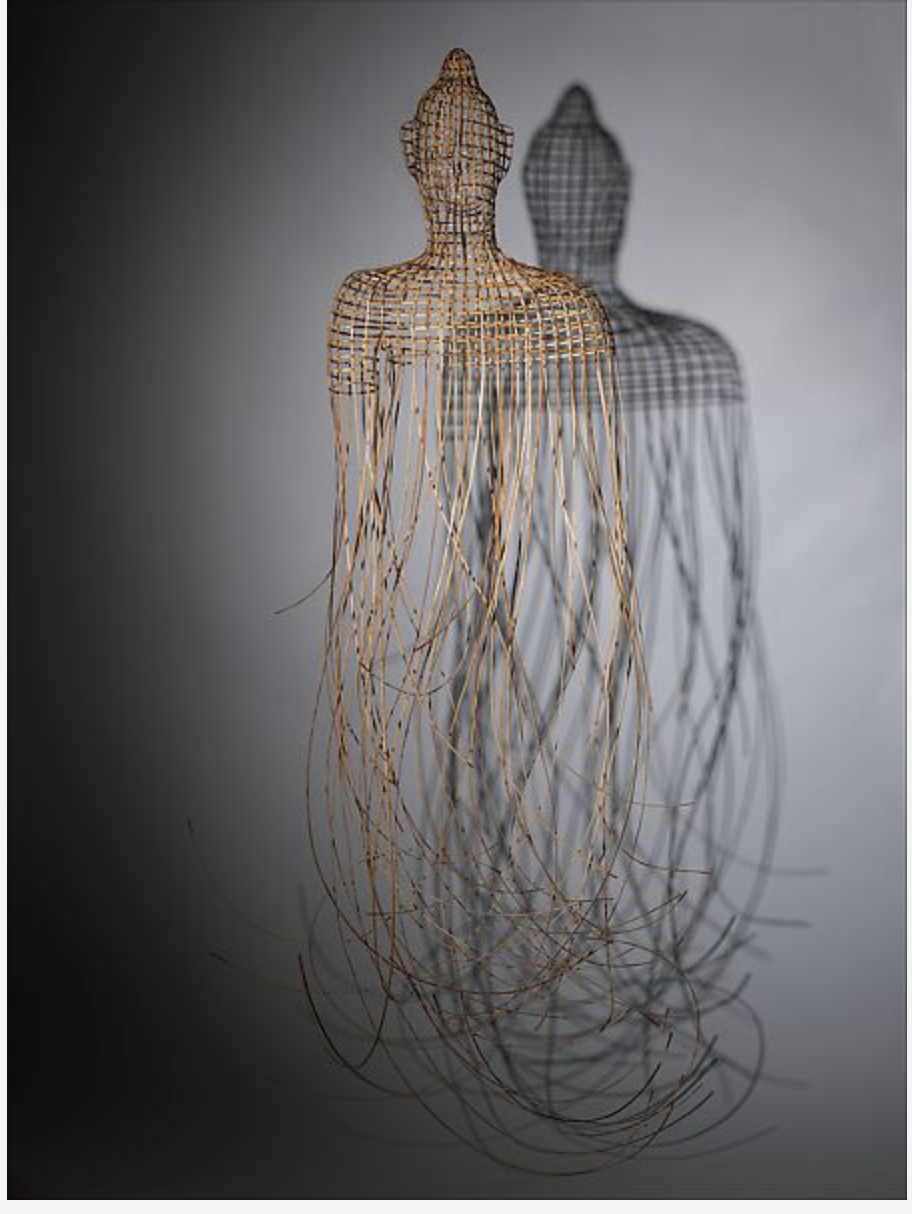
In Better Call Saul, I think Howard has the most tragic death
Lalo Salamanca is the most charismatic character in Better Call Saul, to me
As skilled as the twins,
Every decision has a cost; every action has consequences
Before doing something, look at your motive
Why do we want the bad people in stories to win?
“For others” can also become an excuse
A rule-following jerk is more loathsome than a rule-breaking villain
Walt finally admits: I did it for me
Caring about the same thing, yet still missing each other
How should we view good and evil?
Moral judgment and objective morality are two separate questions
Loving and hurting each other really can coexist
Deviance and labeling theory
Reading associations about compounding, choices and honesty
Learning to slow down is an important task when we are young
When tools change, should the rules change too?
Every era has samurai whose time is ending
Product, Engineering and Open Source
36 entries Define colors, font sizes, spacing, corner radii, shadows and animation durations as a set of variables (design tokens). Every page may use only these variables Use a mature system: React + tailwind Base the components mostly on unstyled primitive libraries such as shadcn/ui and Radix. The foundation already handles buttons, dialogs, dropdown menus, keyboard shortcuts and accessibility; the team only needs to define its own style on top Do a UI review regularly to find problems in the details Write the design specification as a rules file (such as AGENTS.md or .cursor/rules), stating: “Use only these components and tokens; do not hardcode colors.” Have a design engineer polish AI’s first draft. This keeps things fast without becoming increasingly disorganized For every change, combine the relevant components with chromatic visual regression testing to prevent drift Elegant products usually invest in these areas: smooth transition animations (150 to 250 milliseconds, often using Framer Motion), skeleton screens and streaming output (especially important for AI products, to avoid idle waiting), complete keyboard shortcuts and a Cmd+K command palette, dark mode, and dedicated designs for empty states and error states Test the core flows with Playwright People naturally pay attention to people and stories. Conflict, emotion and a connection to their own identity make something worth discussing and sharing The product itself is just a tool. Unless people happen to need it, few pay attention proactively muse flooded people’s feeds because of events: Meta entering the field, reaching number one in the App Store, being blocked by Amazon. Almost nobody discusses the feature list itself What gets discussed most on Chinese social media is closely tied to people’s own lives. Even grand narratives are grand narratives closely tied to them. You would not discuss some celebrity in another country you know nothing about …. Just the calendar and email, with a personal blog or social media information as optional additions: the data sources with the highest information density and the lowest barrier Then deliver value, a personal summary. The first time I feel that town understands me so damn well, I am more willing to keep granting access The recommendations are based on my data, on an understanding of me, and on its own mcp connection pool data to suggest things that suit me. The conversion rate is high sset Scheduling: set some scheduling preferences and make recommendations to me Then I can set some images and create my own townie Finally, sharing: share townie to earn points An additional note: which platform should host these Onboarding flows depends on the platform’s characteristics For users arriving directly from the official website who have not installed the APP, Onboarding on an external page is more suitable For those signing in through the desktop app, desktop Onboarding is more suitable, since it can connect to local MCPs or the local environment Another point: if connecting through iOS, the initial Onboarding would draw on the features of the user’s iPhone, such as native iOS actions button screenshots and notifications Very elegant: starting and configuring each connection, little by little The setup involves a long sequence of connections, so it gives users feedback a little at a time The free plan I was using then supported only ten connections, which felt insufficient very quickly. The allowance can change; check the current plan sandbox is first of all about execution in a computer environment. Essentially, it is needed because untrusted execution is taking place on a computer So if database CRUD is already executed by a controlled backend, each structured call usually does not need its own separate code-execution sandbox Reading files from S3 does not need a sandbox either, provided these really are structured tools executed by the backend on your behalf. Their obvious features are that parameters can be validated and permissions controlled down to particular rows and users Even pure file reading and writing does not actually need a sandbox. You can simply provide read file and write file tools, with the backend reading directly under the user’s prefix. It is no different from CRUD. The key is whether bash is involved A sandbox is needed when running shell commands: executing code written by the model, installing dependencies, opening a browser, or using commands like GREP and sed to process a pile of files. These require an execution environment High-frequency actions must become structured tools. Even if a sandbox can do them, there is no need; for greater speed and precision, and to avoid crossing permission boundaries Not opening a separate execution sandbox does not mean omitting authentication, input validation, data isolation or auditing. The distinction here concerns execution methods, not whether security boundaries are needed. My three go-to tools for managing personal context: notion, at the top level, defines the framework: PRDs, design documents, use cases, ADRs, roadmaps and so on. Then embed Figma links and previews in the spec, and list linear issues or projects at the bottom. Generally, strictly control AI writes to notion. Know clearly what AI has written, and keep the content structure clear. The closer something is to people, the further it should be from full AI automation Figma: AI generally helps with the design here, through a Figma mcp subscription or figwrite free. Mark the notion address on the page, and link back from each detailed feature module to its corresponding task in linear. I must repeatedly review AI’s Figma work manually and leave Comments, then have AI go back and correct and adjust it linear: generally I provide the title and know the direction clearly; AI supplies revised descriptions and tasks. Include Figma frame links here too, so AI can review them Linear issues must include links to the Notion spec and Figma frame for clear context If an AI review finds a major deviation, add it to notion as a Comment. Then I review the Comment and decide how to adjust notion and Figma notion documents must contain reusable content I understand clearly. Random AI designs and so on can go directly into repository documents, connected by comments to the corresponding code or module Users remember contacts rather than conversations superpowers could be called the hottest methodology in engineering Nearly 300,000 GitHub stars, currently version v6.4.2 The author says that in his own evaluations, v6 builds about 50% faster at about 60% lower cost I had been using the brainstorming part, which keeps checking and clarifying requirements with you at the start, to prevent LLM long time coding from drifting off course Then there is splitting work into units and developing in parallel using isolated worktrees. This is especially important for long tasks and multiple agents working in parallel I also use it to turn some of my own standards into reusable workflows, such as TDD and code review rules For example, systematic-debugging and writing-skills: how to investigate problems systematically, and how to write your own skills As model capabilities improve, brainstorming can be reduced. I find brainstorming better than the native plan mode, but running even simple tasks through brainstorming consumes quite a lot of tokens and time I generally do not use brainstorming for small tasks, and use streamlined writing-plans and systematic-debugging alongside them Only for big tasks do I enable the sequence of subagent-driven-development, TDD and code review Because I usually develop across multiple computers, I generally use linear as the task queue The main computer aligns with AI and runs brainstorming and writing-plans. The secondary computers are responsible for “doing,” running only execution, TDD and verification Use brainstorming to clarify the requirements, then writing-plans to split them into independent work units. Each unit must be independently completable and verifiable, without depending on the others; mark dependencies as blocked by in Linear. Write each unit as a Linear issue, with a fixed description template: Goal: one sentence. Scope: which files or directories may be changed, and which must not be touched. Acceptance criteria: executable checks, such as which tests must pass and what commands should output. Context: relevant file paths and links to plan documents. Execution mode: tdd or quick. Add the agent-ready label to indicate that it can be picked up. Secondary computers (executors) Install only execution-related skills: executing-plans, test-driven-development, systematic-debugging and verification-before-completion. Turn brainstorming off, or it will start asking questions and prevent “mindless execution.” Give each issue an independent git worktree and branch, with the branch name corresponding to the issue number, such as xw-123. This prevents conflicts when multiple machines work in parallel. Execution flow: claim the issue, change its status to In Progress, work against the acceptance criteria, and submit a PR after self-checks pass. Add the PR link back to Linear and change the status to In Review. When blocked or faced with a decision, do not guess: leave a comment on the issue explaining the blockage, add the needs-human label, and pick up the next issue The main computer uses the code-review skill to review PRs against the issue’s acceptance criteria. If they pass, merge and close the issue; if they fail, explain what needs changing in the issue and return it to agent-ready I looked at Manus’s cue, and the grok App, muse and dot cloud Computer is very popular among person agents now Here is a hot take: personal computers will still dominate over the next few years sandbox costs are already very low. E2B bills by the second, and short tasks can be very inexpensive, depending on the model, runtime and resource specifications For a small VM running continuously, monthly cost also depends on specifications, runtime and browser load. Browser plus Computer is even more expensive One 24/7 cloud computer per person: once there are many users, infrastructure can easily eat up the gross margin Person agents also face users’ concerns about trusting them with data and code, and accounts and devices that require frequent verification. Sometimes UU remote access is simply more convenient. Sometimes it is better to maintain a Mac mini long-term and let multiple person agents operate it remotely. Everyday code, automated Browser use and Computer use, and account management and maintenance are all much more convenient on that computer HyperFrames Studio from the HeyGen team https://github.com/heygen-com/hyperframes Turn webpages, code or change scripts into video projects that can keep being edited The core is that AI, the editor, the player and the renderer all share the same html It can turn a PR into an explainer video: input GitHub code changes, output a video with animated code diffs, narration and captions It can also make product launch films: AI produces a launch video, from the script to choosing music Typeframe: make videos with animated captions, matching speech with word-by-word typed captions and stylized layouts, then export The workflow pattern: First collect webpage material and brand information, then write the script, storyboard and visual specification, build the scenes, add voiceover, captions and transitions, and finally check, preview and export Technically, for a project, first understand one thing: write in code what image appears at a particular moment My current figma design approach takes a few shortcuts. Since I am a full-stack developer, I have a methodology of my own. But if others have better methods, feel free to suggest them Generally, I design the main flows and key features in detail in Figma, essentially the places where users spend more than 80% of their time For peripheral features or deeper subfeatures, I take shortcuts. If users do not spend much time there, I adjust that part directly in the actual product: later, I have AI fine-tune it based on the page. Changing Figma at that point makes its connections messy and interferes with my design. Design itself also has a certain complexity; going from design to adjusting the UI, to my review, to getting the whole flow working takes a long time. So when the main flow works, I am willing to improvise a little in these areas, refer to good designs online, and simply have it make the changes For relatively independent modules outside the core flow that need design, I have two methods. One is to use figma, opening a separate flow outside the main one and designing that module independently, also using the 80% principle. The other is to use Claude Design or Open Design to help build that module. Since it is often independent, I can create a Web Demo, fine-tune it until it looks good, and clone the Web Demo into the product. Finally, link that Web Demo externally from Figma My understanding of Figma in the AI era is that it does have its own unique advantages. With its own Agent and MCP, I think its design capabilities are no weaker than Open Design, and its success rate in producing samples is very, very high. It also has many templates, which is an important reason I am willing to use Figma. Another reason is that in the AI era, many core flows may still need continual human maintenance. So I use the 80% principle and devote a lot of time to maintaining that main flow, with ongoing human adjustment, fine-tuning and refinement. But returning to the essence of Figma design, design addresses the prior condition that coding is too expensive, and changes are too expensive. Before AI, changing code was difficult. It required coordination between product managers and engineers, backend testing and real-world validation, and a lot of user feedback. Getting the entire flow working was expensive. Now, with Vibe Coding, one person can do many things: from design to product development and feature implementation, then testing and monitoring, a person can independently complete an entire feature. Since changing code is now inexpensive, I think the remaining non-core flows do not need designs I am perfectly satisfied with, or extremely detailed design work. Those areas can be adjusted during coding, implemented and fine-tuned as part of the engineering work itself Understand users, protect their interests, and serve them This is the most basic product ethics I think that if AI still maintains Notion, the management cost is extremely high. It is mainly a human management cost. AI can output quickly, producing multiple versions or many alternative approaches, but managing them is troublesome for people. So for now I still manage Notion myself I define how each template is finalized, how its structure is designed, what the architecture looks like, and how many modules it has. For example, in the system architecture module, I even specify several key architectures in detail. When AI later fills things in or modifies them, it makes appropriate additions and changes directly based on the original content This keeps the human cost of understanding relatively low I think the central question is whether to categorize: do many scattered ideas really need to be divided into a few categories? One important purpose of categorization is isolating their context. Users may also have multiple channels: the channels through which they input things may differ and require different categories to define them. There are also output channels: after we actually input something, when we later use it, different categories may have different uses. But I am thinking that categorization adds a great deal of burden for users and has a strong effect, subconsciously adding a lot of uncertainty to their mental experience I think a very central point concerns the User input process. It should depend as much as possible on the User’s intent. If the intent is clear enough to yield a definite answer rather than a vague one, I think the process should be as lightweight and direct as possible. Ideally, input on macOS would be extremely convenient and quick. I think that would be very useful In fact, I have developed a habit in my own use of macOS. Since macOS has voice input, I was thinking that its voice input generally requires pressing option, holding option to wake it up, and then continuously transcribing For other macOS applications, such as note-taking apps, typing things out is actually quite at odds with how users think. To accumulate this raw material quickly, I think we still need to make the entry point as lightweight as possible, the lighter the better. That makes it a key capability Many people will say: flomo already exists, so what is the point of making another note-taking app? but I think that if I liked what flomo did enough, I would not have this thought I still want a product with more soul, one that prompts people to think, keeps them exploring themselves, and expands who they are! I feel this deeply now: increasingly, my energy and thinking seem insufficient. In the AI era, from observing myself, I think I especially need more thinking, and even more selection Like the word “bottleneck” I used earlier, it is also a way of protecting attention: asking what the most important problem is Apart from thinking, we can already do many things in execution: the work of architects, programmers, engineers, product managers and designers. One person can almost do everything that previously required a full stack of roles But this has another consequence: you need to think more from the product’s and user’s perspective. You must keep exchanging ideas with AI and thinking about your product’s semantic definition, including the semantic scope and forms of communication needed to get the result you want Even though loops are now mature, you need to consider how to design their constraints so AI can keep the flywheel turning and run continuously The complexity of these things is already very high. I now find being a highly capable individual, a one-person company in the AI era, extremely difficult, with higher demands on the person. Yet iteration has undeniably accelerated. Something done in one day now might previously have taken two weeks Thinking remains the most important part. If you create without enough understanding and thought at the outset, the result is still garbage. Instead of taking two weeks to make one piece of garbage, you can make it faster, in a day, or even produce fifteen or twenty in two weeks I actually use plan mode less and less now, putting more energy into the model itself and letting it create and think. Sometimes people may feel they have lost their sense of control over the software, but I think that is inevitable. As we move up to a higher level of abstraction, we also lose some control over the software or the whole system Specifically, I still use Linear. Usually I start with a problem, a question, and discuss it thoroughly with the model until it is defined. At the same time, I understand how the current code works, what I want to do, how it should change, and why the change will improve things Once the question is clear, I update Linear directly. Many models connected to Linear help complete the work. Then I set a goal, essentially a loop from a Linear issue to a fix Why keep moving upward? Because the people we have promoted from below, or selected, can complete tasks well and we can give them trust. They provide acceptance results, or bring decisions when needed, while we set some larger directions. I think this is a very good way to collaborate Otherwise, as a full-stack engineer, especially when doing architecture, engineering, product, design, user work, all kinds of thinking and marketing, the system is already extremely complex. I find that whole process fairly tormenting Without living somewhere or meeting local users, it is easy to underestimate what they use to handle everyday matters. Utility bills, subscriptions, invoices and tax information in email, for example, may be important entry points for a personal Agent. People accustomed to chatting, paying and settling household bills in super apps may not naturally think of these uses. This is an environmental difference, not an inherent superiority in understanding products. Interviews, observation and actual use can all help fill the gap. So I am increasingly wary of assembling use cases and designing my own product empire only at an abstract level. Get involved first, see what blocks users, then talk about what the assistant can solve. Users genuinely want to read a book deeply In the AI era, the cost of reading a book keeps falling, but the ability to read one deeply becomes rarer. Attention is scarce and patience lacking. We quickly absorb AI summaries and concepts, yet lack the patience to become immersed and gain the perspective of lived experience Model: Make it open source Core users care most about a few things: The reading experience A sense of belonging Time for reading Private deployment, serving oneself Flexible uploading and exporting Core capabilities: Read a book deeply; translate a book well Own your data assets and be able to share them. Data ownership, including full ownership of your own comments Support follow-up questions Support comments For language learners, provide translation capabilities Send chapters to users at a scheduled time each day Here is my distributed workflow across multiple machines in the AI era. When away from home, I carry a MacBook, and I like living in different places and working remotely. The MacBook is generally my main workspace for design and things that require prolonged interaction With AI now quite advanced, long tasks usually run on my Mac minis. I have two, managed through Tailscale For remote connections, I use UU Remote. I have tested many remote desktop tools, and UU Remote is what I regularly use now. When it has problems, I use macOS Screen Sharing with Tailscale Finally, Cloudflare Tunnel: when I need to expose a service externally, I use a Tunnel As an engineer who has spent a long time on GitHub, here is my advice from learning open-source projects: Begin as a user. Keep using it and exploring different uses, the pleasant surprises, what is amazing and what is stupid Identify the main trunk. For flows already recorded clearly and familiar to you, trace complete paths: from user input, to prompt assembly, to the agent loop, tool calls, how results feed back in, and finally when it stops. An agent project’s core is essentially this loop, plus context management and the tool protocol. Turn on debug logs or breakpoints and look at the actual prompts and model responses; this is much faster than reading code At the concrete level, ask further questions and dig deeply. Combine product and technical understanding: how is context compressed, what happens when tools fail, what are the trade-offs and boundary conditions? There is design taste in this At the abstract level, analyze and sketch the project’s architecture. If the above starts from concrete details and works upward, abstraction works downward, asking why it is designed this way, how modules are organized and combined, and whether it could generalize to other situations Rewrite a small version. AI is advanced enough now that less intelligent models can do the writing. Once the boundaries are clear, you can give clear instructions to build a Demo. Use smart models only when more intelligence is needed or the requirements themselves are vague If there is something in the project you dislike, improve it yourself and submit a PR. That is the traditional custom! Output… ultimately, it must become a blog post!! Explain why it is designed this way. There are many experiences and methods here too; I will discuss them in detail later!! My personal photos A map of my browsing Support personal sign-in analytics Support my thought notes Support a guestbook Support chatting with me Support test previews of my products Support a CLI Support my various social accounts Support books I have written Support articles I have written daypage database from flomo update telepace loop agent design marginalia ios design solo compass dataset(public date..) The current sign-in flows all use Resend, At different stages, I think about taste differently At this stage, when designing, I see taste as continually making reasoned choices for particular users and constraints, letting visual expression and the experience of use support each other We need to understand why a font fits this content; why the primary action sits here; why a transition needs motion; whether the product remains clear when information grows longer, a request fails or a device slows down And accordingly, how to design the brand and composition On one hand, I think taste is subjective. Everyone has their own view On the other, I think creation can have a broad appeal: certain kinds of taste really can evoke empathy and affection in most people Every design should make one thing clear: what is it trying to express? Can you explain and understand that? For example, if you want to show aspects of everyday life, the visuals should focus on life’s functions, with backgrounds drawn from real life that people readily connect with I now recognize the importance of brand. A brand also deeply influences a product’s colors Body text, secondary information, backgrounds, surfaces and emphasized actions, including translucency and blur, affect readability and consume rendering resources Each detail may call for different visual factors: What kind of tasteful design should appear in which situation? What form does that tasteful design take? What are the colors like? What are the borders like? Should there be transparency or shadows, or something to support the emphasis? Defining Design.md feels especially important. I generally start by finding tasteful websites at awesome-design-md
, then define and fine-tune it
It mainly contains three kinds of content: Colors: primary, secondary, background, text, borders, and state colors such as success, warning and error. Ideally provide both light and dark versions. Typography: fonts for headings and body text, a type scale such as 12/14/16/20/32/48, line heights and weights. Spacing: a fixed scale, such as multiples of 4 or 8 Corner radii, shadows and borders: a few levels for each Motion: durations and easing curves, such as fast at 150ms and slow at 300ms Layout: grid, maximum content width, and breakpoints for phones, tablets and computers For common components such as buttons, inputs, cards, navigation and dialogs: what variants exist (primary, secondary, ghost), what states they have (default, hover, pressed, disabled, loading), and when to use them Character: set the tone with a few adjectives, such as “quiet, paper-like, restrained.” Dos and don’ts: for example, no gradients, no pure black, only one accent color per screen Images and illustration: the style to use, such as real photographs or hand-drawn illustrations Voice: the tone of the writing Accessibility: sufficient contrast and keyboard operation When giving this to AI, the third layer matters most: clearly stating what to avoid does more to prevent AI’s default purple-gradient style than stating only what you want
For example, avoid excessive filler For small changes with clear locations, boundaries and behavior, authorize direct implementation For changes involving the core experience, first produce a proposal and design, or a small separate Demo to inspect For things whose value still needs testing, research or build a Demo before deciding Organize the statuses in my Linear Reading accounts of how the Anthropic team iterates, what I most want to borrow is this: first make a working prototype, give AI a way to check its results, then let actual use continually bring problems back. A feature can begin with several small prototypes to compare, with refinement after the main flow is clear. Whether to write a plan, and how much, still depends on the risk of the change and the clarity of the requirements. Shared rules, code review, internal use before gradual release: all are inspiring. The original note left no verifiable primary sources for its daily release counts or quality-improvement multiples, so I am not treating those as verified team metrics here. Thinking about it, why do we need Linear? Linear helps people manage tasks and requirements, whether features or bugs But returning to first principles: why do we need management? Because the human cognitive burden is heavy. Most tasks need recording, prioritizing, assigning to someone, then tracking This involves very complex context. Managing it requires a tool across threads, and that tool is Linear. Linear does this very well But as AI becomes more intelligent and more automated, people move upward, expressing their intent or actual needs. The whole process is then often led and driven by AI, reusing things itself and completing a series of deployments Many intermediate details no longer need to consume a person’s effort. The focus shifts to the point where the person first expresses a requirement: how people make requests, and the series of things built around that point For example, Slack may be a good way for the Claude team to collaborate, right? In Slack, a Claude tag, an @Claude mention, can address this kind of request How can users express their needs more lightly and conveniently? That is a central question Finding and solving pain points matters more than technology Taking the long view is easy to say, but for me it often goes against the habit of immediate feedback. I need to examine myself from time to time Understanding users is not a slogan. It means actually being present, observing them and putting yourself in their place The earlier a benchmark is established, the more easily it compounds. Learn to establish benchmarks for work and life, such as standards for learning, or schedules and body-fat targets for fitness Development automation can absolutely run N features in parallel Human / log agent / test agent: propose requirements AI: prepare the code in a workspace AI: change the code and run initial local verification AI: push to a test environment and walk through the flow (a person initially prepares a test account) AI: submit a request to go live Human: review AI: after review, CI/CD, integration tests and so on … I came across a SaaS product with real people providing accountability
Doneas is a “human accountability + weekly planning” tool for independent founders, emphasizing human involvement
For me, the value comes down to two things: hiring a guide, and forcing you to clarify what you want to do Three specific arrangements I saw then: Sunday planning: choose tasks from “someday” that you can actually finish next week. Do not overfill it. Monday afternoon freeze: once the plan is locked, you cannot casually add “one more thing.” Insist on adding something and it gets flagged. A 15-minute call each weekday: a regular short meeting with about five other builders. What did you ship this week, what is next, and where are you stuck? Someone notices gaps in your activity; absences are recorded. You have a limited number of self-revivals per year; after that, a peer must vouch for you.Use design to align taste
Test the core flows with Playwright
People naturally pay attention to people and stories, to conflict and emotion
Designing the onboarding part
town’s Desktop setup
Nango’s free allowance is too low
sandbox is first of all about execution
The three main personal context tools I use
Users remember contacts rather than conversations
My judgment of superpowers
I looked at Manus’s cue, and grok
HyperFrames from the HeyGen team
My current figma design approach takes a few shortcuts
Always do the right thing for users
If AI still maintains Notion
I think the central question is whether to categorize
A very central point concerns the User input process
Many people will say flomo already exists
I increasingly feel that my energy and thinking are not enough
I actually use plan mode less and less now
Understand the living environment before designing a personal Agent
A place of one’s own for deep reading
My distributed workflow across multiple machines in the AI era
As an engineer who has spent a long time on GitHub
The most important parts of a personal blog OS for me:
Next steps for the products I am working on
Resend is great
Understanding the definition of taste
People have a strong intuition and feeling for good taste on a website
Defining Design.md feels especially important
A requirement’s path after entering Linear
Give AI a way to check its own results
I feel I may gradually move away from Linear
A few takeaways:
Development automation can absolutely run N features in parallel
Doneas: human accountability and weekly plans
Content, Craft and Recording
12 entries I think that rather than simply going to a place, it is better to observe it deeply, analyze it, and encounter different experiences there. Ultimately, make a very distinctive video of it; perhaps that is a style through which we can stand apart. Whether it is paying a local person or heading out to a fishing village, all kinds of experiences. Experience is precious But how long should I stay? I think perhaps a month in a city in a country is the best amount of time I defined a new Notion workspace The most important change was removing all the previous to-dos and reminders and replacing them with “Current Constraint,” which I define in Chinese as a bottleneck We all know time is the most limited resource. But whether managing time, energy or state, I think the most, most important thing is managing what we do not do, rather than what we do We know we need to focus, but how do we get focus? We need a not-to-do list, or our time gets consumed. In this process, I define what is currently most important: to realize my vision or get through the current stage, what exactly is the Current Constraint? How does it stop users from reaching the ultimate result? What actual evidence shows it is the main constraint? Will resolving it substantially improve the overall result? Then, around this Current Constraint, cut everything less important to it and postpone it, rather than declaring those things worthless. This includes ineffective communication, meetings, documents and social activity This is an age with so much room to try. I keep returning to a question: what would make a model of a person useful? How do we build one around a person, and what do we do with it afterward? Text is one way. Images and video are others. Put them together, and they become material about this person. Gather that material into a representation that people can understand and Agents can use. There is still plenty here that needs explaining. How to write a better article, for example. A Threads commenting prompt I wrote for an automation tool at the time, kept here as a record of my rules for expression: I have watched both Breaking Bad and Better Call Saul. What struck me most is how patiently their stories follow the course of people’s lives. What I cannot let go of is having seen the other lives these people might have had, then watching those possibilities disappear, little by little… Sometimes I feel reluctant to let them go, sorry for the choices they did not make. But perhaps, if they had chosen differently, they would no longer have been themselves. The content resonates without making it hard to follow. The titles draw in the right audience and put a personal feeling into them. The collections are great too, with a distinctive perspective. So much content works by producing anxiety. Better content can work through recognition. I think of the landscapes I have photographed, the school playgrounds mentioned, the stars scattered over my hometown… I have long wanted to write a book or a column, adding a little to it every day. Practice staying with something for the long term. A Game That Doesn’t End. Writing it for myself too… Sometimes I see myself in two states: Creator and Consumer. In one, I receive, filter and enjoy what other people have already made: scrolling, searching, saving and sharing. That has value, and it can be rest. But when I have collected a great deal without forming an understanding or making anything, I begin to feel empty. The other is creating: tending the ground every day like a farmer, waiting for fruit, and living with the seasons and luck. For me, turning an idea into something another person can use brings a more grounded satisfaction. Most people move between the two. So do I. Rather than ranking people, I would rather ask myself: do I need rest right now, or am I using consumption to postpone something I really want to do? AI feels so ubiquitous now that it leaves me saddened by the state of media. I do not object to AI-generated work itself. So much of it is simply padded out with meaningless or noisy wording. How can I put “answer more precisely, say less that is unnecessary, and save attention” into a system prompt—and check that it actually helps? Leaving that question here for now.Rather than simply visiting a place, observe and analyze it deeply
A major change happened recently
The people worth rewarding are those willing to keep creating
What is the point of building a model around a person?
How to write an article more clearly
A prompt for posting on Threads
Use my Threads account to read public posts about reflection, growth, AI, technology products, entrepreneurship and travel. After each round, wait a random one to three minutes before reading another post and its visible comments. Comment directly only when there is something worth responding to; do not chase a quota or flood a feed. Check recent replies for duplicates before posting, then verify that the result is actually visible. Write as naturally as I would in an instant message: usually one to three sentences, 20–120 characters, following the original post's language and use of simplified or traditional Chinese. Pick one specific detail and offer one new angle. You can add a condition, ask a real question or clearly disagree, giving the other person a natural opening to respond. Do not lecture or provoke just to sound profound. I am a native Chinese speaker working in AI, technology and products. I care about how technology works, whether people actually use a product, and what it changes in daily life. Respect people's feelings too: when someone is struggling, understand first. Do not diagnose them, force a lesson about growth onto them or turn all of life into an efficiency problem. Avoid decorative quotation marks, report-like lists, empty praise and polished aphorisms. Do not rely on formulas such as “not X but Y,” “put simply” or “the underlying logic.” Do not force in “what do you think?” Do not invent my experiences, test results or positions, and do not disclose private information. This authorizes only ordinary public comments—not likes, follows, private messages or settings changes. If login expires, verification is required, a rate limit appears or the submission result is uncertain, stop that operation and explain. Do not bypass restrictions or blindly resend. Work sequentially.
What stayed with me after Breaking Bad and Better Call Saul
I watched some GoFlex_ videos and found them interesting
A Game That Doesn’t End
Consuming and creating are states I move between
Respecting attention is more than a slogan
Prompts should respect attention too
Business, Investing and Career
12 entries However intelligent someone is, their gifts may not find a useful outlet if they are in the wrong position. Sunk costs can make this difficult: we are afraid to leave because it feels as though the past few years would have been wasted. But that time has already passed. It should not become the main basis for deciding what to do next. Life continues from where we are now, and the time ahead is precious. This also makes me think that, once we have the ability to do something, we need to prevent the means from gradually replacing the purpose. Sometimes we worry that, if we had enough power, we might abuse it. Ordinary people may have little power at work or in the wider world, but everyone can have some within a family. How do we treat our children and the people close to us? Do we overuse the power we have over them? Resources need tending, and so does making a living. We need to ask what matters most and how to make it happen. Xu Xiaoman showed me another layer. She is clever, understands how to get along in the world, and knows how to communicate. Yet handling the world’s relationships also requires understanding the other person: what kind of person they are, what judgments they need to make, and what opportunities our abilities might actually open up. For founders, there is often plenty of ego early on. We can overestimate our judgment while underestimating what it takes to turn a judgment into a result. A customer still may not pay. Perhaps they have not understood the value, perhaps we have misunderstood it, perhaps they do not want the switching costs, or perhaps they worry that our company will not be around. So I want to return to the user’s perspective more often. If we want to change something in the world, whose situation would have to change first? Who are these people, and why would they want that change? Demanding that others behave according to my intentions—do this, do that—is far too self-centered, and can do damage. What comes to mind now is to start small, with something concrete, and work from there. I remembered a discussion about sharing benefits. My original note included two percentages, but reversed the relationship between how much was shared and how many people would participate. I also did not have a reliable source for the quotation, so I have left out the numbers and the attribution. What I want to remember is that giving collaborators a real benefit can be better for a lasting relationship than taking everything available now. But giving something up does not automatically create trust. It still depends on who the other person is, whether the rules are clear, and whether the cooperation can last. Money can be an incentive along the way without having to be the destination. More than two years after graduation, I look back at university and where I am now. Especially in a time when attention is spread so thin, some things feel important. A creator said exercise matters. Of course it does. I agree with Alan’s idea of building a lean, muscular body. But looking back, there are things I regret too: not really experiencing a romantic relationship, being too eager for quick results, doing too much without going deep, and not settling down to study theories and fundamentals. University gives you a great deal of time in one place. Classes take up relatively little of it. Saying classes do not matter would be untrue, though. They do matter. We often approach them as preparation for exams, but without that framing, every course offers something to explore deeply. Beyond our major, there is time to understand how the world works: economics, society, culture, technology, business and politics. After graduation, with work day after day, at least for me, it becomes much harder to find those unbroken stretches of time and energy. I liked operating systems at university, for example. The course itself covered a limited amount: threads, processes and the kernel. But I had time to explore further. How would I build an OS, put together a cluster, or distribute scheduling across clusters? That curiosity and willingness to go deep later helped open up opportunities at cloud-native companies. Looking back, that time feels most precious: an environment and space where I could explore and dig into things, without worrying about survival or being left behind. It helped me believe that, when I meet a problem later in life, I can settle down and keep digging. There is something beyond competition and confrontation. Find it and hold on to it. Accept that I am entering a finite game. Its rules bring limits, rewards and competition. To participate in the world is to accept being judged by other people. It is like stepping onstage: there will be an audience, made up of people on opposing sides. Treat the rules as part of the game. Budgeting and fitness products are already crowded fields. RevenueCat’s 2026 report
also records the rapid increase in new subscription apps. But if I still want to build something, perhaps I should begin with a smaller, more clearly defined group. Personal trainers, for example. First find out whether they would actually pay to save time on administration. Suppose 10 to 20 trainers each paid $29 to $99 a month: that at least gives me a small-business scenario to calculate. It is a scenario, not validated revenue. Another idea is to serve people receiving weight-management treatment who also want to keep up strength training. A product could help with recording, communication and following a professional plan. It should not decide medication or treatment for the user. Start by looking at specific complaints, interviews and actual use. The original note mixed global revenue, conversion rates from one platform, medication-user counts and patent-approval timelines without aligning their sources and scope. I have left those figures out, rather than using them to assume that the market must be viable. I wonder what I would do even if I were financially independent. Pursue pleasure? Would that really be enough? At this age, it feels difficult. There is so much I want. Not only material things, or even happiness. There are other things too. My own working definition of hedonism concerns the overall balance of pleasure and pain in daily life. If pleasure minus pain is greater than zero, I would call that a life leaning toward happiness. Going beyond hedonism asks another question: are there things we need to choose even when they bring no pleasure? “We choose them” does not mean they will necessarily bring some higher form of pleasure. There may simply be something else that matters more. We might value happiness, or we might value truth. To go beyond hedonism is often to say that pleasure matters, but may not be enough to define a life worth living. People can also care about truth, relationships, freedom, creating, and becoming someone they can respect. “Does this make me happy?” remains worth asking.
But I also ask: “Is it true? Is it my choice? Does it fit the values I am willing to take responsibility for?” Reading about Japan’s employment ice age brought home a feeling: how a society that once believed “work hard and tomorrow will be better” can gradually become one where “keeping what we already have is enough.” Some people’s expectations fall along with it. Careers do not follow just one path: some people move from non-regular to regular work, while others move in the opposite direction. JILPT research on the employment ice-age generation
found that instability at graduation could continue to affect later career paths. Japan’s traditional hiring system has a particular preference for new graduates. Once someone misses the hiring window at graduation, even a recovering economy may not lead companies to offer the same terms to an applicant who graduated several years earlier. Reading about Japan’s employment ice age makes me think about what happens to an individual when industries change. Even in a difficult overall environment, there can be new needs and technological opportunities. They will not fall equally to everyone. My original note placed the founding of several companies into the same story around 1995. That timeline was wrong. Nor can the success of brands we recognize today prove that an ordinary person at the time could have seized those opportunities. The more useful reminder for me is to look at whether demand still exists and whether I can keep building skills when choosing an industry. Seeing opportunities in AI should not make me underestimate cash flow or the cost of changing direction. Direction matters, and a choice still needs specific evidence. The history of Japan’s employment ice age suggests that spending a long time outside useful professional networks, without building skills or maintaining cash flow, can narrow a person’s future choices. That makes this approach important to me: secure a stable income first, then use the remaining time to test a product. Even in the AI era, many businesses put old wine in new bottles. If I want to make money, I can first spend some time studying why established business models work, then ask whether AI or other technology makes a new version possible.Ability, position and sunk costs
Sharing benefits and the limits of long-term cooperation
Looking back on university, more than two years after graduation
Beyond competition, what do I want to hold on to?
Entering the world means entering a finite game
Within the rules, do what I can to share and show my work
Start testing with a more specific fitness audience
What would I do even if I were financially free?
How expectations change during an employment ice age
Between industry opportunities and personal choices
A reminder from Japan’s employment ice age
Even in the AI era, many businesses put old wine in new bottles
Travel, Places and Cities
9 entries When reading stories of migration to Southeast Asia, I need to distinguish periods and routes. People forced overseas as laborers in an earlier era cannot simply be placed under the same sailing conditions as those who later traveled to Southeast Asia by steamship. My original note put “high mortality” beside “one or two” without specifying the number of passengers, period or source. That figure cannot stand as written. I will leave the questions open: what were the voyage, disease risks and contract conditions like at the time? Understanding that journey requires more research. In Fujian and Chaoshan, especially at some museums in Shantou, I saw many accounts of people going overseas and found them illuminating. I also remember what may have been an art museum near the coast in Baoshan, Shanghai, about Shanghai and the people who left by sea. I still need to find its exact name. These stories include people forced to leave and people actively seeking an opportunity; laborers, shopkeepers and merchants, and later students, engineers and founders. They cannot all be arranged along a single route that everyone followed. Migration in different places and periods overlapped. The timeline I jotted down mixed the California gold rush, railway construction and migration across different regions. To understand a particular journey overseas, I still need to return to the person, the route and the circumstances. I want to keep looking into this. The things that catch my attention in dreams feel strange. I might dream of snow and feel delighted. In ordinary life, I rarely think that way: I have seen snow so many times, both at home and while hiking and traveling. Yet I am the one dreaming, just as I am the one encountering, feeling and thinking about the world in daily life. These seem like two states, each a temporary coming-together. Buddhism speaks of no fixed self: conditions such as the five aggregates come together temporarily and keep changing. In a dream, they gather into another state with its own emphasis. When awake, I have a different emphasis of my own. Sometimes, after learning many names and concepts, perhaps we should put them down for a while… Last night I dreamed of seeing snow and running freely through it. In waking life, I do not particularly like snow: it was familiar from childhood at home, and later I often saw snowy mountains while hiking… Perhaps I had compressed the concrete experience of snow into a familiar noun. Thinking of snow then sent me back to all the times I had already seen it, and to the feeling that I did not like it that much. But that is not the whole story! I remember being excited every time I saw snow as a child. Perhaps I had grown tired of seeing it; snow itself had not become boring. A definition had taken over my thinking. What if I stopped defining snow and felt the scene instead: today’s light, the smell of the air, the sound of snow falling? They are different every time. Zhuangzi says the fish trap exists for the fish, and once the fish is caught, the trap can be forgotten. A name is a tool for catching fish. Once it has served its purpose, I need not keep holding on to it. An empty cup can hold water; a full cup has no room left. While staying in Southeast Asia, I once crossed the Thai–Lao Friendship Bridge and encountered ways people tried to extend a stay through a brief exit and re-entry. Later, when leaving the country, paperwork and fees delayed me until close to boarding. I had very little control over the situation. I was angry at the time, but I did not have enough information to judge the basis of the extra charges. I should not have turned that experience into a judgment of all the staff, either. I have also removed my extreme speculation about what might have happened. What stayed with me was the importance of rules and keeping some control. Entry, permitted stay and re-entry are different things; another person’s experience is no guarantee for my own. Saving a little visible expense while leaving an uncertain paperwork risk was not worthwhile for me. Next time, I want to check official requirements in advance and leave enough room. Thinking about the small-town lives I have encountered, they do not seem easy. I have also met sincere people who were reluctant to take advantage of anyone. These encounters cannot stand for everyone in the countryside, but the details have stayed with me. A friend said she had left some signs and markers for me along the pilgrimage route from Portugal to Spain… Remember. One more side quest. A dream for this lifetime: after retirement, open a chain of cafés around the world, each a place with its own culture and atmosphere. Walking into a café would feel like walking into our story in that country. If I build it, I want it to be a personal companion app for traveling—a companion along the way.The risks of going overseas differ across periods
Understanding people who went overseas through museums
Dreams and waking life draw my attention to different things
Sometimes it helps to put names and concepts down
An experience at the Thai–Lao Friendship Bridge
People in small towns who do not want to take advantage of others
A side quest on the pilgrimage route
After retirement, I want to open a café with stories
A personal companion app for the journey
Daily Notes and Everything Else
8 entries Group chats are, at their core, a form of categorization. Finite and Infinite Games discusses boundaries alongside horizons. I find the distinction interesting. A particular organization, contest or position has conditions for participation and rules for a given stage. Culture and learning can keep opening outward, until even the rules themselves become something to discuss. But a finite game does not mean that real-world rules can never change. Another question is what inspires me: which everyday constraints must I follow for this task, and which are simply conventions? Understanding where a rule comes from helps me decide whether to do the job well within it or find another way to participate. I watched some of the first season of The Big Bang Theory this afternoon and really got drawn in. Sheldon and Leonard each have such a distinct personality, and their rational ways of thinking are funny. It is interesting that people like this can find one another in one place. Each is so much their own person. One of the show’s best qualities is that I can enjoy the jokes without fully understanding all the science and engineering. In sitcoms of this kind, the apparently harmless, socially awkward nerd who repeatedly offends women has almost become a standard comic ingredient. Sheldon is particularly interesting to me. He is written as so intelligent that he cannot understand, or does not care about, social conventions and other people’s views. He dismisses everyone’s feelings. I think I really have changed. Last night’s dream was a series of scenes, something of a nightmare, with people whose lives looked deeply unhappy to me: very low wages, all kinds of pressure, little control over life, families unhappy in countless ways. Thinking about them made my earlier logical consistency feel like an escape. I had not lived what they had lived. I was not one of those people, so I could stand at a distance, stay rational and make my explanations fit. I had no words, only a heavy feeling. Then I thought again about the meaning of life. An answer I cannot quite reach. For now, just look, observe and feel. There is still so much unfairness in the world, and so many individuals who are human just as I am. Perhaps their lives make sense to them. Perhaps they can be happy too. But as someone who has choices, if life really is a game, perhaps I could do something. Even if I cannot do much, perhaps I can say something. With so much feeling… As a child, my parents were the first people to teach me about the world. Now that I am older, I have also begun helping them adapt to it. “The world is changing so fast.” It is still standing there in the distance, the red flag moving in the wind. From childhood onward, at different ages, the flag has meant different things to me. Listening to a podcast on a walk. Having a beer while watching the sunset. Talking with Dot while I work.Group chats are a form of categorization
Notice the rules, and question them too
An afternoon with season one of The Big Bang Theory
Beyond being logically consistent, there are lives I have not lived
Thank you, Mum and Dad
Growing up also means helping my parents adapt
Looking out at the flag at the distant school
A few ordinary moments I enjoy
Body, Health and Daily Life
4 entries Are the things that followed industrialization necessarily right? Perhaps they are simply what has emerged at this stage of how the world works. Looking back at the things we take for granted, whom do they serve? Electricity, for example: do we need it in quite this way? Along with what it gives us, what have we lost? Cities are brightly lit every night. But night is night. Why must it look like daytime? Would it not also be good to sleep when it is dark, look at the stars, then get up to live and work in daylight? Many people may not realize how valuable exercise can be, or build it up into something too daunting, resist it, or hesitate because they do not know how little the first step can cost. Exercise offers a lot for the effort, and some feedback comes quickly. At least for me, I began noticing changes in strength and control fairly soon after starting. That does not mean everyone will see changes in appearance on the same schedule. But that feeling of strength, of having more control over a muscle, is noticeable. The investment can also be small. Sit-ups, push-ups, strength exercises, even going for a run all count. They can help me build strength, and I do not always need to pay for a place to do them. The change in how I use my body feels tangible. I can start with movements that suit my ability; I do not have to be able to perform a standard push-up immediately. I also agree with developing better eating habits. I do not pursue an elaborate diet so much as make some judgments about everyday food. For me, that means choosing more high-protein foods where I can: eggs in the morning with some bread for carbohydrates, for example, then more chicken and a little less rice or noodles at lunch. These are my experiences and food choices, not a training prescription for everyone. For gradually increasing activity and including strength work, see the WHO physical activity guidelines
. Tomorrow I will definitely go to bed early. Next week I will definitely start exercising. … If I look at life through Finite and Infinite Games, life is an infinite game. So is exercise. An infinite game is played so that the game can continue. For me, keeping it going includes looking after the body I have now. I can begin going to bed a little earlier today. The ability to delay gratification matters. It begins with avoiding little sugar traps in the present: late-night barbecue, comforting soap operas, Threads…
Noticing that choice now can help me avoid sacrificing time or long-term health. Stay with things that are difficult and worth doing. Over time, my own threshold and standards may rise too.A brightly lit city makes me think about darkness
I have long agreed with Alan about exercise
How many times have I promised myself I would start tomorrow?
Delaying gratification starts with small choices now
References
- A 2007 experiment
- cost estimate relayed by a media report
- Context Engineering: How Deep Agents Remember
- official Tesla Roadster page
- Your AI assistant might be picking the wrong tool
- Google’s TTS documentation
- Building agents: When to fold subagents into your main agent loop
- Claude Duet help documentation
- official tool-search explanation
- The Metropolitan Museum of Art’s collection record
- Outsiders
- awesome-design-md
- RevenueCat’s 2026 report
- JILPT research on the employment ice-age generation
- WHO physical activity guidelines
- Bounded delegation: How much authority should AI have?
- The SSPAI article linked in the original note
- Reading link for chapter eleven of Seeing
- HyperFrames repository

Responses