

This is a thought experiment-style simulated interview. The respondents are fictional characters composed of developmental psychology, field anthropology, and the author’s personal experience—no real experts are quoted.
In December 2025, I wrote in my notes: Exploration no longer provides sufficient momentum.
At first, moving to a new city wasn’t just a change of scenery. New languages, social structures, and rhythms would disrupt your existing self. Once your position loosened, your identity followed; once your identity loosened, possibilities multiplied. For a long time, “traveling” and “becoming someone new” were nearly synonymous.
Over a year later, cities began to repeat. Even unfamiliar neighborhoods quickly revealed tourist zones, local living areas, commercial hubs, and traces of power. Complex cultures, too, became easily categorized within existing frameworks. Adaptation accelerated, and the initial shock faded.
I once thought the problem was that the destination wasn’t far enough. Maybe I should have gone to Europe, Africa, or somewhere with greater cultural divergence.
But if the world has become repetitive, does pushing further still count as exploration—or is it merely avoiding a harder beginning?
The Interview Begins with an Uncomfortable Question
Me: Why does a life that once sustained me eventually fail?
Developmental Psychologist: I’ll treat this as a hypothesis. For you, exploration may have served three functions at once: gathering information, keeping identity fluid, and producing the feeling of continued growth. When all three worked together, the pull was strong. Later, you became better at compressing a city into a familiar pattern, so each place yielded less new information. “Digital nomad” hardened into a stable identity, and the fluidity disappeared. What remained was the third function alone: using movement to prove that you were still growing.
The danger here is that a behavior can continue without fulfilling its original purpose.
Field Anthropologist: I have reservations about this explanation. It still treats distance as a tool for personal development—whether information is sufficient, identity has loosened, or growth continues. Locals become your variable again.
Familiarity also damages perspective. When you first arrive, you don’t know what matters—you let the environment teach you. Later, you arrive with a mature framework, already interpreting the scene before it speaks. The world may not repeat; your interpretation speed may have outpaced your sensory experience.
The opposite of exploration is not staying put. Its real opposite is recognizing too quickly—deciding that you already know what a place is before it has time to resist your categories.
Why Novelty Is Often Mistaken for Growth
Me: But new places do generate many ideas. Isn’t that growth?
Developmental Psychologist: Yes, but it’s crucial to distinguish three things: stimulation, insight, and structural change.
Stimulation excites you; insight lets you say something you never did before; structural change means your decisions differ after returning to your original environment.
Many travels complete the first two steps but miss the third. You feel transformed while traveling, yet upon returning, attention, relationships, and actions are reclaimed by your old patterns. The experience isn’t false—it simply lacks sufficient integration time.
Me: So “having been” doesn’t equal “owning”?
Field Anthropologist: More precisely, awareness only becomes part of your life when it transforms into obligation.
Have you ever seen slow living and wondered if you’d willingly reduce your schedule? Have you witnessed local mutual aid and considered taking on responsibility in your relationships? Have you observed poverty and happiness coexisting and questioned whether you’ve truly redefined success? If not, distance merely offers richer material for your existing self.
The cost of a flight isn’t the most expensive part of travel. The real expense is what you must abandon upon returning.
Is Exploration Just Advanced Delay?
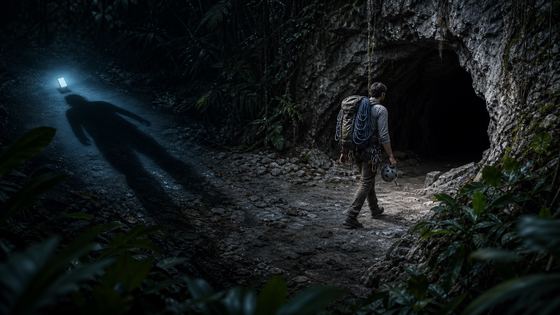
In May 2026, I felt a strong vitality again in Laos. The caves of Vang Vieng, motorcycles, mountains, and temporary companions reaffirmed that I needed real stakes, physical presence, and shared responsibility.
Yet that same month offered contradictory evidence. After staying in Vientiane for a while, drinking, meeting people, and chatting became routine. It seemed free on the surface, but internally, choices had vanished.
This shows the problem isn’t “moving versus staying.” Movement can be an active bet or inertia; stillness can be fear or commitment.
Me: How do I know if I’m exploring or delaying?
Developmental Psychologist: Ask whether this action could overturn your plans.
True exploration allows reality to shift direction. Delayed exploration only gathers evidence supporting “I can’t decide yet.” The former gradually resolves; the latter always creates the next step.
Ask a harder question: If the next city doesn’t make you more unique, would you still go? If the answer weakens immediately, you might be chasing an ever-updating self-image—while the world lags behind.
Field Anthropologist: I don’t want to add another personal growth metric. I care more about whether you’ve started accruing relational obligations.
True depth in fieldwork happens when researchers are remembered by locals, people wait for them to return, and commitments cannot be revoked at will. Tourists consume differences but don’t repay relationships. Someone who never enters with obligations gains freedom but loses the condition for being truly transformed by the world.
Short stays can also create obligations. A promise to send photos back, a friend’s entrusted task, or communication that requires response after departure—these can extend a journey beyond its end date. Conversely, someone who stays in one city for five years might interact only with service systems. Duration alone doesn’t replace commitment.
Building Is Not Exploration’s End
We often imagine life as two phases: exploration in youth, then settling after finding answers. The flaw here is assuming exploration will yield a single correct answer.
Reality operates in two cycles. Exploration expands possibilities; building allows some possibilities to endure time. Exploration asks, “What else is there?” Building asks, “What remains when this thing repeats, fails, and goes unappreciated?” Without exploration, building risks becoming inherited defaults; without building, exploration cannot distinguish preference from fleeting excitement.
Me: So this shift isn’t from freedom to constraint?
Developmental Psychologist: It’s from freedom of possibility to freedom of consequence.
The former—“I could be anyone”—is light and alluring. The latter—“My actions leave consequences in the world”—requires boundaries, repetition, and responsibility. Humans cannot live out all possibilities. Maturity doesn’t necessarily add options; it often requires certain possibilities to die with choice.
Field Anthropologist: The best gift distance offers might be knowing where to pause. Continuing to move is just one possibility.
After the Return: Who’s Still Waiting for Me?
I originally planned a ninety-day experiment: pick one question, don’t change it, deliver continuously. It felt neat and familiar, like other recent answers I’ve written. The anthropologist’s phrase—“whether you’ve incurred relational obligations”—disrupted this framework.
After exploration fails, my first instinct is to design the next phase. But whether distance truly changes me might be answered from the other side: After leaving, is there something still requiring my response? Is there a specific person who, through meeting, can demand something of me? Have my judgments changed how I treat people around me now?
This is more complex than selecting another long-term project. Projects remain defined by me; relationships bring back others’ time.
I’ve gone through months of notes—cities, caves, temples, perspectives. What deserves more attention next might be another list: people I promised to contact, send things to, or visit again, and whether I actually followed through.
Don’t rush to book the next ticket. Only when this list is completed can distance truly become present.

Responses