
This is the final essay in Reckoning with Reality. The first six considered profit, competence, action, feedback, and technology. The last returns to a question no model or market can decide for us: what kind of life am I willing to pay for?
When we discuss a choice, we habitually list the returns.
How large is the market? How high is the income ceiling? Will growth come faster? Can the path eventually produce a moat? The more complete the spreadsheet, the more rational the choice appears.
But every path comes with another price list, one that is rarely displayed.
Opportunity Cost Never Appears on the Bill
When we buy an object, its price is written clearly. When we choose a life, the most expensive part usually has no number.
Choosing to build a long-term product costs more than development time. It also requires sustaining belief through a long silence. Pursuing cash flow means more than repetitive operations; it means allowing customers, delivery, and working capital to divide your attention again and again. Keeping a stable job gives up some uninterrupted time and upside, but may buy peers, training, organizational leverage, and a scale unavailable to someone working alone.
The cost of choosing A includes not only what we spend on it, but also the life that choosing B might have made possible.
Opportunity cost is hard to feel because the abandoned road does not send us a bill. It appears years later in the form of “What if?”
This is why we can envy mutually incompatible lives at the same time. We envy the founder’s freedom but do not see the anxiety of cash flow. We envy the ease of a stable career but overlook organizational constraint. We envy the creator’s visibility, forgetting that the person must keep exposing themselves each day.
We see the return on someone else’s choice. We bear the full price of our own.
A Road Trains the Person Who Walks It
A job provides more than income. It trains attention.
Someone who sells for years becomes more sensitive to desire and objection. An engineer learns to break a problem into testable structures. A creator instinctively looks for conflicts that can be told. A manager continually balances people, incentives, and resources.
This training compounds. It also creates path dependence.
As ability grows, external rewards increase, and the opportunity cost of changing direction rises. What began as a temporary choice may eventually become “the kind of person I am.”
Identity does not form from nothing. It is the sediment that repeated behavior leaves in time.
So when choosing a business, it is not enough to ask how much it can earn. A better question is: What does it reward in me every day, and what does it punish? If repeated for ten years, what will this system of incentives make of my judgment, patience, and relationships?
A person can leave a job without immediately leaving the self that the job trained.
Some Prices Fall with Time; Others Rise
When I first began writing, the absence of readers was painful. After years of writing, expression, readers, and a body of work accumulate; the next essay no longer begins entirely from zero. This kind of road charges heavily at first and may compound later.
Other roads do the reverse. The short-term income is good, but each delivery requires selling time again. More customers create more coordination; personal attention is cut into smaller pieces. Scale does not reduce the cost. It magnifies fatigue.
Yet “writing compounds while service merely sells time” is too simple. Work no one truly reads does not become an asset automatically because there is more of it. A service that leaves reputation, case studies, process, and industry understanding can make the next delivery less like starting over.
When judging a path, we should examine not only today’s price, but the shape of its price curve.
Will experience, trust, and accumulated assets make it cheaper over time? Or will commitments, maintenance, and dependence make it more expensive? More important, do I own what remains, and can I carry it onto the next road? Is today’s hardship building the future, or merely maintaining the present?
Not all repetition compounds. Repeating the same labor a hundred times without preserving ability, relationships, data, or reputation leaves only fatigue.
Envy Hides the Other Person’s Bill
Munger often warned against envy because envy is a method of comparison that counts another person’s gains but not their costs.
When we see someone make money, we do not know how much risk they carried. When we see someone travel the world, we do not know what rootlessness has done to their relationships. When we see a person devote themselves wholly to an ideal, we do not know how they endure the long absence of external feedback.
Envy edits another person’s life into highlights, then compares those highlights with the whole of our ordinary days. The comparison is unfair from the start.
A more useful question is: “Would I buy the whole life at its original price?”
Put sleep, stress, relationships, repetitive work, and the probability of failure back into the package, and much of our envy dissolves. What remains may point to a genuine preference.
Ask in Reverse: Which Pain Am I Unwilling to Bear?
We may not know exactly what we want most, but we are often clearer about which costs will wear us down.
Telepace taught me that a long absence of external response erodes me. Daily use of DayPage taught me something else: when a problem appears in real life every day, slowness is not necessarily painful. Both appear to be long-term products, but their prices differ. One is sustained mainly by a promise about the future; the other returns a little meaning through use on the same day.
Some people can tolerate volatile income but not layers of approval. Some accept organizational constraint but do not want to express themselves in public every day. Some love long research but cannot bear frequent selling. Others need immediate feedback and struggle to keep their energy alive through years without a response.
These differences have no hierarchy. Training yourself for years to become your opposite is usually more expensive than changing paths. Yet preferences are not fixed at birth. Awkwardness in selling can decline with practice, and public expression can become more tolerable. We cannot interpret every discomfort as proof of a poor fit, or the price list becomes an argument for never leaving the comfort zone.
Thinking in reverse is more useful here than a vision board. Instead of imagining the high point after success, write down the most ordinary, repetitive, applause-free day on each path.
If that day repeated ninety times, would I still return? Ninety days cannot simulate ten years, but they can reveal whether I dislike the novice stage or an essential activity the path can never remove.
Passion can start a journey. Fit often hides in our tolerance for the mundane.
Cash Flow Buys Optionality
People sometimes treat stable income as a lack of courage and regard going all in as proof of sincerity. This story ignores the value of options.
Savings and cash flow let a person reject bad deals, allow experiments to fail, and make it possible to wait for opportunities supported by stronger evidence. Once cash flow disappears, every decision is distorted by the time remaining for survival.
Stability can, of course, become endless postponement. Say “I will start when conditions improve” for long enough and cash flow protects only immobility.
The point is not whether stability should be kept or abandoned, but what it serves. If steady income gives experiments budget and patience, it is buying future options. If it merely anesthetizes dissatisfaction, it is charging a price too; the bill has only been deferred.
No Choice Can Eliminate Regret
We often hope to find an answer so correct that it exempts us from future regret.
That may be the least realistic demand we place on a choice. Every decision closes some possibilities. Even when a choice brings success, we can still imagine that another road might have suited us better.
Maturity may mean remembering why we agreed to pay when the cost actually arrives. It may also mean admitting that the original calculation was wrong when reality changes the quote.
If a path’s hardship serves a goal I recognize as mine, fatigue can still contain order. If the cost serves a goal I never seriously chose, even an attractive return can accumulate resentment.
The price of a road has at least three parts: the tuition paid to enter, the recurring fee paid each day to remain, and the exit fee visible only when we try to leave. The first two often appear in the plan. The last hides in identity, relationships, maintenance obligations, and sunk costs. The harder a road is to leave, the less sensible it is to judge only by its return at entry.
The Next Step Is a Judgment About Price
After finishing this collection, I still do not have a career answer that can be applied like a formula.
I have only gained a few better checks: use profit to test an exchange, but do not let profit replace value; delay the intervention of competence so a system cannot become an escape; choose actions that are allowed to fail; use fast metrics to learn and slow results to judge; whenever technology solves a problem, search again for the new constraint.
The final part can still be answered only by oneself.
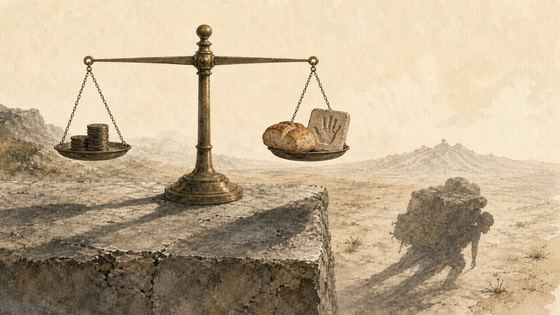
On the surface, deciding what to do next is a comparison of directions. Underneath, it is a judgment about price. Which uncertainty, repetition, responsibility, and loss am I willing to bear over time for a particular end?
Freedom is not finding a road without a toll. It is seeing the price list clearly and still being willing to sign your name. Nor is the signature a lifetime contract: when a new bill appears, I remain responsible for recalculating—and for leaving.


Responses