Dissecting open-lovable: An App Generator That Tames the Raw API Without an Agent Framework

Paste a URL, and in seconds an AI rebuilds it into a running, previewable, chat-editable modern React app. That’s the first impression of firecrawl/open-lovable — 27k stars, 5.2k forks, 94.9% TypeScript, a flagship open-source example built by the Firecrawl team. It targets the commercial product Lovable.dev (the README says outright “for a complete cloud solution, use Lovable.dev”) and sits in the brutally crowded “AI app generator” lane alongside Lovable, Bolt.new, v0, and Replit Agent. ...

June 29, 2026 · 26 min · 5414 words · Xinwei Xiong, Me
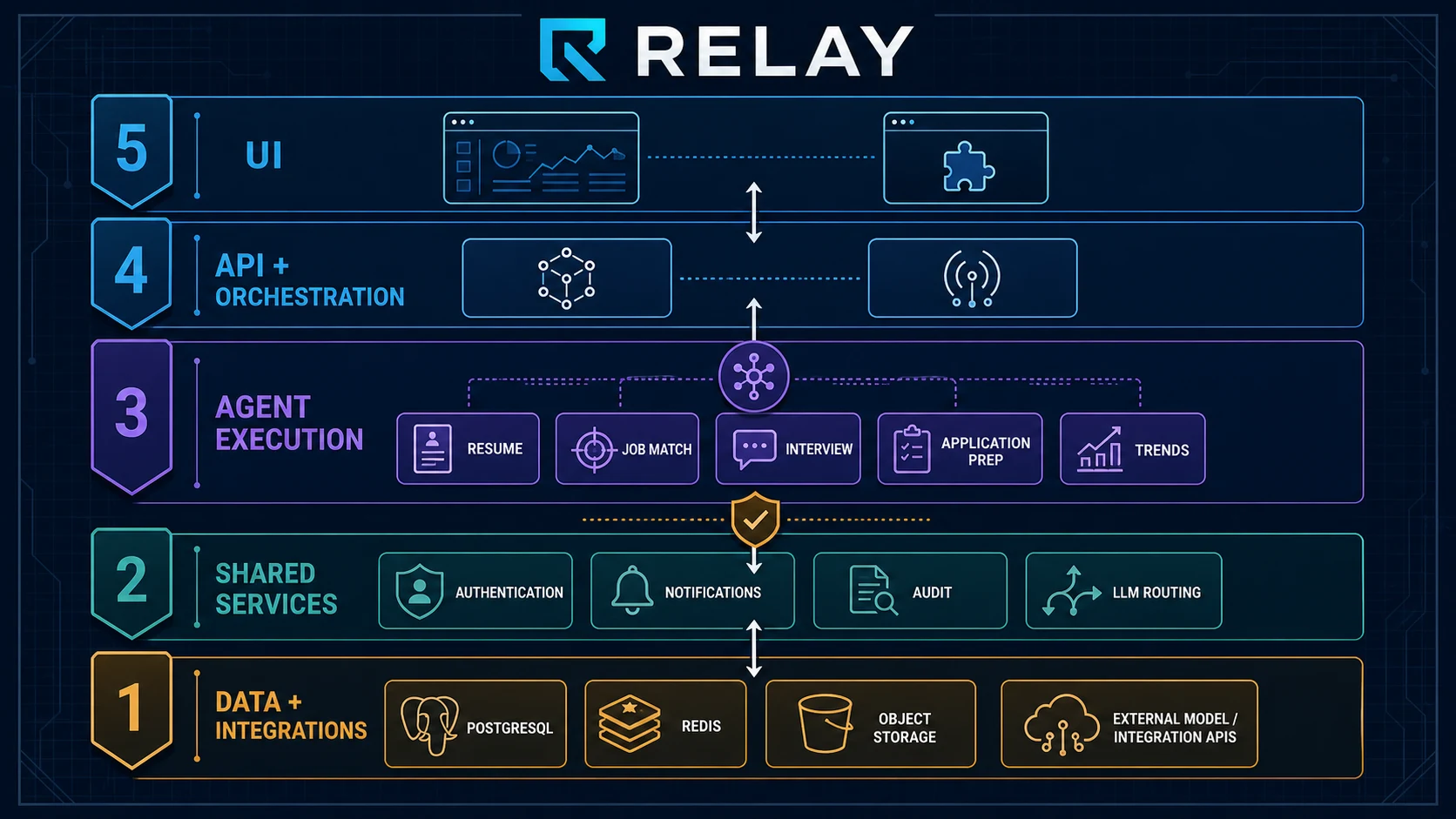
Technical diagram showing the five-layer architecture of the Relay job-search Agent system: UI layer, API orchestration layer, Agent execution layer, shared services layer, and data and integration layer

Building a Production-Grade AI Agent System from Scratch: A Full Architecture Breakdown of Relay

“Most Agent projects die in the unmapped wilderness between PoC and production.” I wrote that line while reading through the Relay project documentation. Relay is an open-source AI Agent system for job searching — not a demo built on three lines of LangChain plus GPT-4, but a project with complete architectural documentation, 172 engineering tasks, a hybrid tech stack, and explicit counterexamples for every major design decision. It is not fully running yet. The Agent layer code is still being written. That is exactly why I think this article is worth writing: this is a system that has thought very deeply at the design level, and those deep thoughts — regardless of where this project ultimately lands — are valuable references for everyone doing Agent engineering. ...

June 24, 2026 · 20 min · 4223 words · Xinwei Xiong, Me
A wide schematic of context engineering: the Write / Select / Compress / Isolate pillars feeding an AI, a laptop with notes, and a local-first world line

Context Is Not Prompt: Why Context Engineering Is Becoming AI's New Foundation

“We are not really writing prompts. We are furnishing a room for the model — deciding what gets carried in, where it sits, when it gets moved out. The wording is just a sticky note on the desk. What we are actually doing is the interior work.” If you had asked me in 2024 “how do I use AI well,” I would most likely have talked to you about prompts: how to phrase instructions, how to set a role, how to give examples. But if you asked me the same question today, my answer would be completely different. ...

June 22, 2026 · 16 min · 3259 words · Xinwei Xiong, Me
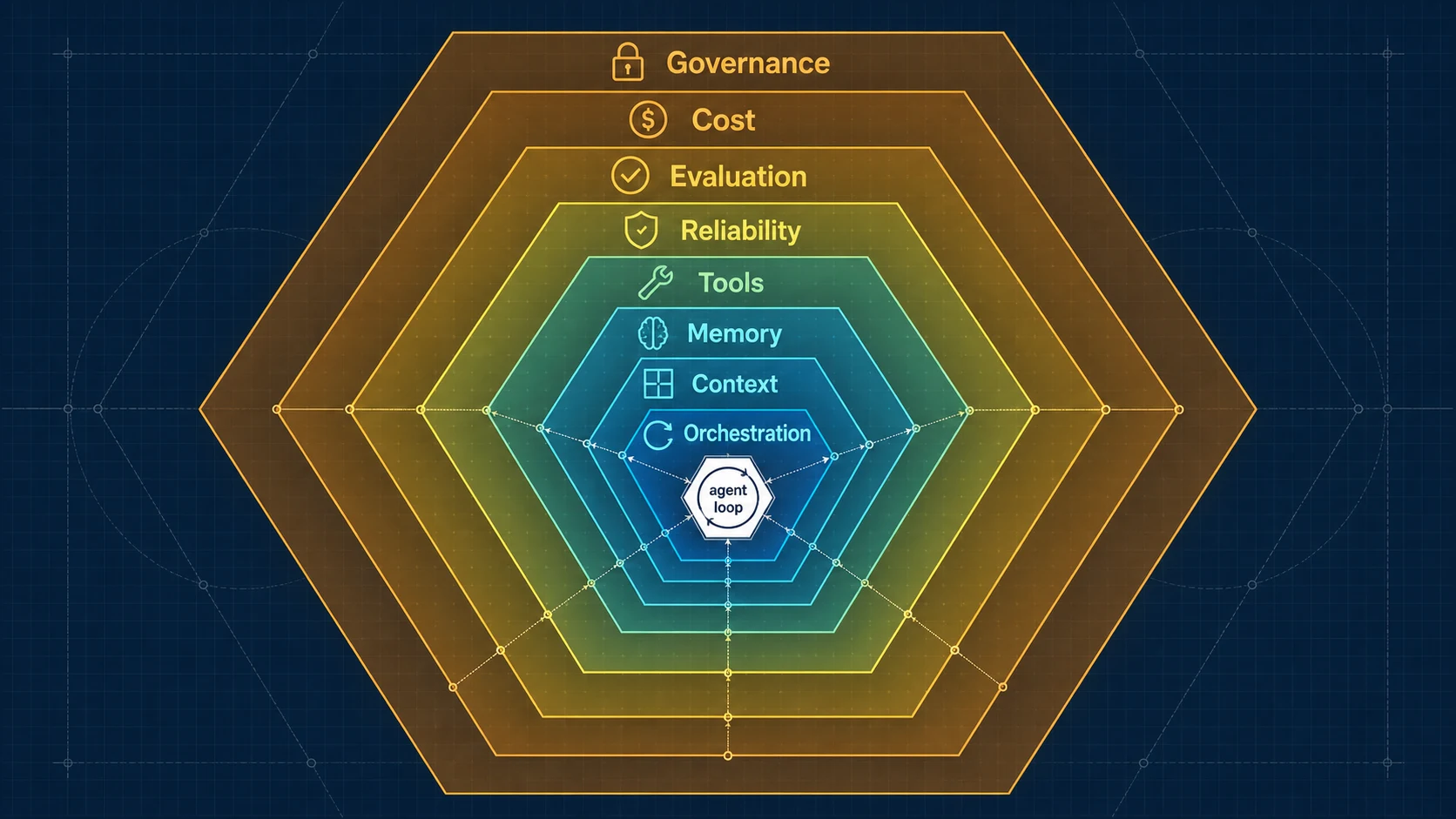
A technical diagram with a tiny agent loop at the center, surrounded by concentric rings of the eight pillars: orchestration, context, memory, tools, reliability, evaluation, cost, governance

The Agent Engineering Map: Where Does That 98.4% of the Work Actually Live?

“The agent loop is 10 lines of code. Agent engineering is 100,000 lines of code.” The first time I read that, I paused — and the more I sat with it, the sharper it cut. It punctures the single biggest illusion in this whole field: people think building an agent means writing a good prompt and wiring up an LLM API. But the actual work of pushing a demo to production — of running safely, unattended, all night long — is 99% not in that loop. ...

June 17, 2026 · 30 min · 6377 words · Xinwei Xiong, Me
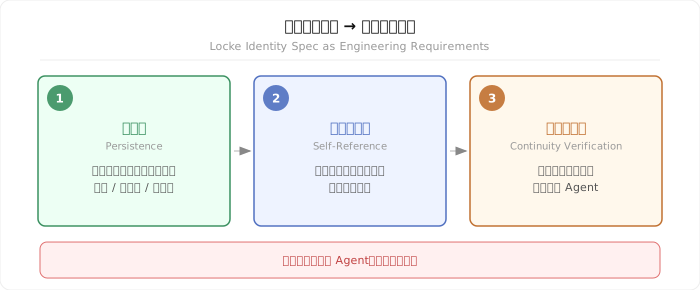
Locke Identity Spec — Agent Identity Engineering Stack

Agent Identity: From Locke to OpenClaw

Agent Identity: From Locke to OpenClaw On the engineering practice and philosophical framework of AI agent identity continuity 0. Introduction: An Engineering Problem Misdiagnosed as Philosophy The cost of agent amnesia is systematically underestimated. Not because users are annoyed—though they are. But because statelessness breaks the foundation of the trust account. Every session, the agent starts from zero. It doesn’t know who you are, why you got angry last time, whether that promise from three months ago was kept. From an economics perspective, it’s like rebuilding your credit score for every transaction—transaction costs explode, and there’s no learning accumulation. ...

April 5, 2026 · 22 min · 4541 words · Xinwei Xiong, Me

Kubernetes Resources and Learning Path Summary

Requirements 🔥 We need to further study and advance in kubernetes, reading source code is a necessary path. 👀 More importantly, it’s the collection of kubernetes resources. ⚠️ All resources use external links, book resources may not have links, others are personal experiences and summaries. Please contact for removal if there’s copyright infringement. 🚧 ⚠️ **Note: This article will be permanently stored in notion and will be continuously updated, providing a write channel. If you have better resources, welcome to add them on notion ~** CloudNative Learning Path ...

August 6, 2024 · 6 min · 1208 words · Xinwei Xiong, Me

LangChain: Building LLM Applications

May 22, 2024 · 0 min · 0 words · 熊鑫伟 (Xinwei Xiong)

Large Language Models: How LLMs Work

LLM’s basic learning theory [toc] Introduction to large language models Large Language Model (LLM), also known as large language model, is an artificial intelligence model designed to understand and generate human language. LLMs typically refer to language models containing tens of billions (or more) of parameters that are trained on massive amounts of text data to gain a deep understanding of language. At present, well-known foreign LLMs include GPT-3.5, GPT-4, PaLM, Claude and LLaMA, etc., and domestic ones include Wenxinyiyan, iFlytek Spark, Tongyi Qianwen, ChatGLM, Baichuan, etc. ...

May 15, 2024 · 147 min · 31282 words · Xinwei Xiong, Me

Troubleshooting Guide for OpenIM

Translation and Enhancement of the Article on Troubleshooting Techniques Using OpenIM If you’re seeking specific answers to issues related to OpenIM, I regret to inform you that this article isn’t a collection of problems and solutions. Instead, it focuses on the troubleshooting methods and debugging techniques gleaned from development and operational experiences using OpenIM as a case study. If you’re interested in learning how to diagnose faults and pinpoint issues, please continue reading. ...

April 16, 2024 · 28 min · 5925 words · Xinwei Xiong, Me

Navigating the Open Source Landscape

Open Source Has Greatly Contributed to My Growth Open source has significantly contributed to my growth, providing numerous experiences and learning opportunities. For those interested in my journey, here is a guide based on my first open source experience: Open Source Contribution Guidelines . When I first got involved in open source shortly after starting university, I discovered that many well-known open source projects are supported by industry experts. This often leads people to believe that only “experts” can contribute to open source. However, the reality is different. It’s common to hear questions like, “I’m a beginner, can I contribute to open source?” from those who are interested but unsure where to start. ...

April 13, 2024 · 11 min · 2317 words · Xinwei Xiong, Me