

An animated character moves through several shots without changing color or proportions. Captions appear on cue, and the final movement lands on a musical beat. Watching a piece like this, it is tempting to conclude that the model has suddenly learned to understand video. Yet in the public Shipvideo project, the central artifact Opus delivers is an HTML document. A browser turns it into frames, and an encoder turns those frames into a video. Project overview
That does not diminish the work. It changes the question. We need to explain why code suits this kind of animation. We also need to explain why this generation might do better when other models can use the same tools.
As of September 26, 2026, the public evidence supports a measured conclusion: Opus 5.5 has made clear gains on tests such as professional chart reading and generating CAD programs from multiple views. Real projects show the value of putting related capabilities into a production workflow. But improvements in complete animations cannot yet be attributed entirely to the model, much less to a demonstrated breakthrough in world models or a particular reinforcement-learning technique. Following the production process helps locate what each piece of evidence actually supports.
How one program becomes hundreds of frames
The official Opus 5.5 interface accepts text and images and produces text. The model was released on September 22, 2026. This interface does not directly output pixel-based video. Model documentation
Text can be a script, but it can also be an executable program. Shipvideo takes the latter route. The model writes a single HTML file containing layout, graphics and animation logic. A browser’s virtual clock advances time, the renderer captures each frame, and ffmpeg encodes the result. The director prompt also restricts external images, video and randomness to make the work reproducible. Director source , renderer source
This approach moves part of the difficulty into a form that is easier to control.
Consider a hypothetical 30-second animation at 30 frames per second: 900 frames in total. If a character’s shape and color are defined in one drawing function, all 900 frames can use that definition. The model does not have to decide what the character looks like again in every frame. It needs to specify position, scale, expression and movement at a given moment. Program execution guarantees part of the consistency across frames.
Movement can likewise be expressed through a small set of rules. To bring a circle into view from the left, specify its starting point, destination, start time, duration and an easing curve. The curve controls acceleration or deceleration; the renderer computes all the intermediate positions. If the logic is correct, extending the movement by half a second, changing the circle to blue or raising its path becomes a targeted edit.
A second public project, PDoomVideo, makes this a production rule. Each shot should be a pure function of time t, using shared character shapes, a palette, a timeline and beat helpers. A pure function means that asking what to draw at second 12 yields the answer without first playing seconds 1 through 11. Frames can therefore be rendered in parallel or out of order, and inspected at specific moments. Animation guide
The benefits are concrete. Reusing a character reduces identity drift. A shared timeline reduces timing mismatches. Deterministic execution reduces changes between runs. Parameterized edits reduce the cost of rebuilding an entire sequence. Motion graphics, product explainers and stylized animation are particularly well suited to these conditions. Complex human movement and open-ended physical scenes remain different problems; these cases do not establish the same advantages there.
A program, however, faithfully executes the decisions it receives. A character drawn incorrectly in every frame can still be perfectly consistent.
The hard part is making decisions that work together
“Turning visual intent into a program” sounds like an explanation, but it leaves out something essential: the intent is usually underspecified.
Suppose the request is, “Make a lighthearted, 20-second animation explaining caching to a nontechnical audience.” This is an illustrative example, not a model experiment conducted for this article. The model must first choose a visual representation: a small drawer, a service counter or a temporary note. It then needs to make the difference between the first data retrieval and a later cache hit understandable, while managing captions, pacing, space and the ending.
Those decisions constrain one another. A complete explanation may contain more text than viewers can read in time. Holding a caption longer leaves less time for the next action. Enlarging the database changes both the data’s path and the composition. Even if every part runs without a coding error, viewers may still have no idea where to look.
A stronger model’s potential advantage therefore extends beyond writing fewer broken functions. It may choose an explanation that can actually fit the format, preserve that choice during implementation, and know what to trade away when a problem appears. Dividing a task into ten shots is easy. Making all ten serve the same explanation is harder.
PDoomVideo’s public storyboard offers a useful example. Its protagonist grows from a doodle on a screen to a planetary scale. The stage returns repeatedly with escalating action, before a final pullback reveals a theatrical performance. That narrative choice constrains every scene: scale can increase, but the scenes must still belong to one world, and the ending must resolve the earlier visual setup. Storyboard
A commitment like this helps prevent a film in which every screen is busy but the whole has no direction. Yet a storyboard and evidence that the model independently, reliably completed every production step are different things. The project author describes two generations in Claude Code, with additional instructions about brushwork, visual interest and transitions in the second round, and says the model wrote the storyboard and collaboration guide. These are the author’s production notes; the repository does not provide a complete execution trace that verifies every step. The music has a separate source dating to 2024 and should not be counted as audio or video generated natively by Opus. Author’s account
How much of the visual quality was already specified?
To understand the finished piece, we also need to ask which decisions someone had already made for the model.
Shipvideo’s director prompt contains fairly detailed design requirements: 20–40 seconds, 6–10 beats and no more than eight words on screen at once, alongside a narrative sequence, font choices, a palette, easing and a final hold. These rules preempt common problems such as walls of text, flat pacing or an ending that disappears too quickly. Director prompt
When this system produces a clean short film, part of the explanation is that it draws on design knowledge supplied in advance. The model still has to select the content and implement it correctly. But it did not discover the principle of keeping on-screen text brief during that particular run.
Attribution is slightly different in PDoomVideo. According to its author, the model helped write the production rules. Producing useful rules may itself be a model capability. The additional direction supplied in the second round remains a human contribution, however. Neither crediting the model with every good decision nor dismissing its contribution because prompts exist is justified.
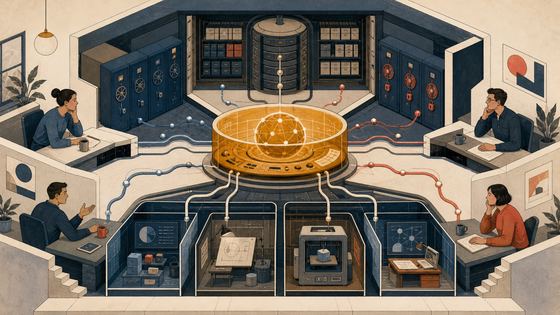
It helps to distinguish the roles. The project definition specifies the deliverable. Rules narrow the range of possible designs. The model chooses and implements a particular design. The harness—the runtime that lets a model call tools, receive results and continue working—connects those decisions to an actual environment. The renderer produces the frames. An agent evaluation measures the model together with its runtime, a distinction Anthropic’s evaluation engineering documentation explicitly makes. Agent evaluation guide
Feedback is another part of the process that is easy to overestimate.
Shipvideo’s check_scene reports JavaScript errors, network errors, visible DOM text and the background color at selected times. It does not return screenshots for aesthetic review. This can help detect a page that failed to run or text that did not appear on cue. It cannot adequately judge whether captions are obscured, text drawn inside Canvas is legible or a composition feels stiff. “No errors reported” is a long way from “looks good to a viewer.” Checking tool source
PDoomVideo’s guide, in contrast, calls for rendering stills and contact sheets—several frames combined into one image—and inspecting beginnings, endings, intermediate frames and transitions. It asks for checks on occlusion, scale, contrast and stiff movement. That feedback is closer to the visual problem. But requiring a check does not establish that it happened, and a handful of stills cannot fully assess motion or pacing. Inspection instructions
A tool’s value depends on the errors it exposes and on the model’s ability to correct them. An environment that returns only logs does not acquire visual review simply because a vision-capable model is using it.
If everyone has tools, why might this generation be better?
So far, we have explained the advantages of code-driven animation, not the improvement from earlier Opus models to Opus 5.5. Programs, browsers and collaboration rules are not exclusive to this model.
More direct evidence appears in the system card. The following figures use comparable results reported in the same edition. Keeping the with-tools and without-tools columns separate helps prevent different sources of improvement from being collapsed into one.
| Task and metric | Opus 5, no tools | Opus 5.5, no tools | Opus 5, with tools | Opus 5.5, with tools |
|---|---|---|---|---|
| Chartography: professional chart-reading accuracy | 29.8% | 64.4% | 83.4% | 89.0% |
| BenchCAD: 3D geometry voxel IoU | 0.497 | 0.730 | 0.899 | 0.962 |
Chartography contains 100 professional chart-reading tasks. The report uses five runs, adaptive thinking at max effort and a common grader. BenchCAD asks models to generate CadQuery code from multiple views of an object. These results use a 1,000-sample subset and five runs; voxel IoU measures spatial overlap between the generated geometry and the target. The system card corrects an earlier implementation from 128px to 256px per view and recalculates the older models’ scores. Comparisons should therefore use the figures in this card rather than splice together results from earlier reports. System card §8.13.1–2, pp.199–204
The gains without tools matter: external checking tools cannot explain the entire improvement. Chart reading and reconstructing geometry from images are closer to the model’s own visual understanding, spatial reasoning and ability to express a solution in code. BenchCAD, in particular, connects understanding an image with writing a program for its shape, providing relevant supporting evidence for visual work created through code.
Both generations improve substantially when tools are available, showing the value of feedback and an execution environment. But subtracting the columns does not tell us “what percentage came from tools.” Tools change the solution process, while model capability affects how tools are used. The two interact, and reasoning computation has not been strictly held constant across models.
More fundamentally, reading a chart correctly is not the same as understanding pacing, and geometric overlap does not make an animation interesting. Some humor and creative-mastery measures in the system card do not show the model leading across the board. Those measures are not animation evaluations either, but they caution against turning a specific capability gain into a claim of universal aesthetic superiority. System card §6.4.7, pp.116–118
Independent testing adds context. Artificial Analysis reports an Intelligence Index score of 58, with leading results on six of ten tests. Terminal-Bench 4.0 is level with Astra at xhigh effort, while the model trails on CritPt, AA-LCR and GDP.pdf. Analytical and presentation performance improved on AA-Briefcase, which uses the reference harness Stirrup. However, at max effort, output averaged approximately 119k tokens per task, compared with approximately 73k for Opus 5. A shared harness does not mean a shared computation budget, and token counts are not equivalent measures of computation across models. Artificial Analysis report
Together, these results strengthen the case for improvement in model-side task capability. They do not supply the missing controlled comparison for animation. This article has not run a model-swap experiment or a blind review of completed films.
Any ranking of causes needs to specify what it is explaining. To explain why this system can produce controllable short films, program representation and deterministic rendering are foundational. Project rules and available feedback shape what it can finish, while the model makes and implements the decisions. To explain why this generation improves under otherwise equal conditions, gains in model capability are a candidate with more direct supporting evidence. Rules, the harness and budget may amplify those gains; reliable contribution percentages are not available.
One plausible mechanism is that a few capabilities crossing a usability threshold can improve the perceived whole far more than a modest change in an individual score suggests. An earlier system may spend its time fixing execution errors, alignment problems and missing characters. If a newer one finishes that basic work sooner, the same time budget can go toward holds, transitions and visual emphasis. The audience sees the more polished result. This explanation fits the production process, but it would need actual rework and timing records to verify it. It is not an established measured property of Opus.
What does reinforcement learning actually explain?
At the training level, four processes need to be distinguished.
Pretraining lets a model learn patterns in language, code, image associations and other data. The system card lists internet sources, public and private datasets, permitted user data and synthetic data from other models, followed by post-training and fine-tuning. It does not disclose enough about architecture, parameter counts or data proportions to reconstruct the causes of the capability gains. System card §1.1, p.11
Post-training further adjusts model behavior. Reinforcement learning is one method: the model attempts tasks, and the training process uses reward signals to adjust its parameters so that higher-reward behavior becomes more likely. The Opus 5.5 system card explicitly discusses RL training episodes, software-engineering environments and monitoring for reward hacking. Whether RL was used is therefore not entirely unknown. But a public causal link is still missing between “RL was used” and “a particular aesthetic reward produced most of the visual improvement.” System card §6.2.1, pp.97–99
Inference-time feedback belongs to the current task. A model sees a rendered result, notices an obscured caption, moves it and renders again. It is revising the current artifact. Without a separate training process, that revision does not mean its parameters have learned aesthetic judgment in real time.
Evaluation asks whether a system meets its requirements. Code can check duration and runtime errors, models can help compare images, and people can judge expression and pacing. A pre-release evaluation does not update parameters by itself. Its results may guide later development or training, but that is a separate step. Evaluation methods
For an animation training task, designing the reward would be a central challenge. The following is an explanatory hypothesis, not a recipe published by Anthropic. Reward only successful video export, and a model might deliver a still image. Add a reward for captions being present, and it might make them too small to read. Reward abundant visual change, and it might produce meaningless shaking. Each easily computed proxy can diverge from what a viewer actually wants.
This is why feedback that reveals problems is valuable but cannot, by itself, explain creativity. Designing training objectives, monitoring reward hacking and testing generalization on tasks held out from training are distinct jobs. The public record establishes that RL participated in training. It does not establish how much animation quality came from any particular training change.
Is this a breakthrough in world models?
We should distinguish knowing many things about the world from learning environmental dynamics that can support prediction.
For world-model research concerned with interaction and control, a useful operational test is whether a system can predict the subsequent environment from a current state or observation and an action, including new action sequences. Dreamer 4 explicitly studies learning an environment model from data and training behavior within imagined trajectories generated by that model. Its project demonstrates interaction and task execution in Minecraft. Dreamer 4 research
A fixed-timeline animation chiefly answers, “What should be drawn at second 12?” A world model must also handle, “What would happen if I took a different route now?” A script can predetermine the former. The latter requires meaningful predictions in response to changed actions.
Programs can, of course, define simulated worlds, and language models may write interactive programs with physical rules. That still does not establish that the model has learned generalizable, open-world dynamics from data. The animation projects discussed here provide no such validation. They demonstrate the ability to organize, implement and execute visual programs. A world-model breakthrough requires a different set of tasks and evidence.
An IPO may explain timing, but not how the pictures work
Commercial context is worth understanding, although it cannot substitute for technical analysis. On June 1, 2026, Anthropic announced that it had confidentially submitted a draft S-1 registration statement to the SEC, indicating preparation for a possible IPO. The announcement did not say that the listing was complete. Official announcement
As a business inference, IPO preparations may strengthen the incentive to demonstrate product capability. That provides possible context for promotion and release decisions. It does not explain how shared character definitions preserve consistency or why chart-reading scores improve without tools. Nor does it establish that a demonstration was fabricated. Skepticism is more useful when directed at checkable questions: Were only successful samples selected? How many attempts were made? Did someone revise the work? How much time did it take?
What is still missing is a comparison on the same task
For readers choosing a production tool, the most useful next step is to have different models produce the same deliverable, rather than compare each model’s most impressive demo.
Give Opus 5, Opus 5.5 and another coding model the same short-film brief. Hold the runtime, assets and rules constant, and run multiple attempts under several explicit cost or time limits. A shared harness controls tool conditions, while actual spending must still be recorded: equal token limits do not imply equal cost or computation. Reviewers who do not know the model identities can separately assess factual correctness, text readability, motion and pacing, character continuity and ease of revision. Report failure rates, human intervention and time as well.
To investigate the contribution of rules, compare versions with and without design guidelines. To investigate feedback, compare log-only feedback with access to rendered frames. That makes it possible to distinguish better first drafts, stronger error correction and greater spending.
We can already establish that code offers an effective way to organize visual production and that Opus 5.5 has made meaningful progress on related visual and programming tasks. What remains unestablished is how reliably those gains become better complete films under equal production conditions.
The next time a demo impresses you, look for three more things: a runnable project, the revision process and the failure record. The finished piece shows what is possible. Those three additions bring you closer to what you can expect in practice.
References
- Claude Opus 5.5 specifications and release date
- Claude Opus 5.5 System Card : this article uses §1.1, §6.2.1, §6.4.7 and §8.13.1–2.
- Artificial Analysis: independent Opus 5.5 evaluation
- Shipvideo project
, director prompt
, checking tool
, renderer
. Source references are pinned to commit
38ce668. - PDoomVideo author’s account
, animation guide
, storyboard
. References are pinned to commit
fa546a3. - Anthropic: Demystifying evals for AI agents
- Dreamer 4: Training Agents Inside of Scalable World Models
- Anthropic: confidential submission of a draft S-1


Responses