

Status update, July 2026: The Sora website and app shut down on April 26, 2026. The Sora API is scheduled to shut down on September 24, 2026. This is no longer a guide to getting started; it is a record of what the technology, the product, and their ending can teach us.
When I first wrote about Sora in February 2024, the irresistible detail was the one-minute video. Two years later, the more useful story is about boundaries: a research result is not a product specification, a better model does not guarantee a permanent service, safeguards do not erase risk, and generated media does not arrive with a simple answer to copyright.
Technology writing often turns “demonstrated” into “available,” then quietly turns “planned” into “dependable.” Sora’s full arc is a useful correction. Forecasting is easy; returning to an old forecast after the facts change is the harder discipline.
A Timeline That Must Be Read by Date
| Date | What happened | How to read it |
|---|---|---|
| February 15, 2024 | OpenAI published the Sora research preview and technical report, including high-fidelity examples up to one minute long | A research result and qualitative demonstration, not a public service commitment |
| December 9, 2024 | Sora Turbo launched on Sora.com for ChatGPT Plus and Pro users | A product accepting text, image, and video input, with output up to 1080p and 20 seconds |
| September 30, 2025 | OpenAI released Sora 2 and a standalone Sora app | The model added synchronized dialogue, sound effects, and ambience, alongside better control and physical consistency |
| April 26, 2026 | The Sora website and app shut down | The consumer product ended; users needed to export their work |
| September 24, 2026 | The Sora API is scheduled to shut down | Developers with remaining integrations must migrate before this date |
The dates prevent us from inventing one timeless product out of three different things. The February 2024 research model, December 2024 Sora Turbo, and September 2025 Sora 2 did not share one fixed set of capabilities or limits.
What OpenAI Actually Disclosed About the Technology
From video to spacetime patches
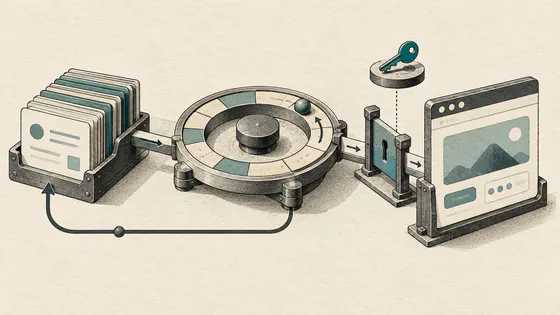
OpenAI’s technical report describes Sora as a text-conditional diffusion model trained jointly on videos and images. A useful mental model has three layers:
- A visual encoder compresses video into a lower-dimensional latent representation instead of processing every raw pixel directly.
- That representation is divided into spacetime patches. Each patch covers both space and time. It plays a role analogous to a token in a language model, but it is not a word token.
- A Transformer processes noisy patches while the diffusion process iteratively removes noise to produce a video or image.
This shared representation lets one model train on and generate visual data with different durations, resolutions, and aspect ratios. Training at native sizes also preserves composition better than forcing every clip into one cropped format.
Sora also adopted the recaptioning approach used for DALL·E 3: a captioner produced detailed descriptions for training videos, improving the model’s ability to follow descriptive prompts. That helps explain why subject, setting, action, and camera direction matter in a prompt. It does not mean every instruction will be obeyed reliably.
“Diffusion Transformer” is an outline, not a recipe
The public facts stop at a fairly high level: diffusion, Transformer processing, latent compression, and spacetime patches. The 2024 report explicitly says it does not include model and implementation details.
That leaves several popular claims unsupported:
- a fixed number or type of GPUs required for training or inference;
- an exact cost per generated video;
- the parameter count, layer layout, or training-data mixture;
- real-time generation at a particular resolution;
- a reproducible implementation inferred from the public diagrams.
The old version of this article filled some of those gaps with assumptions about A100 GPUs, rental prices, and generation time. Precision without evidence is still speculation. If OpenAI did not publish a number, the honest value is “unknown.”
A One-Minute Research Example Was Not a 20-Second Product
This distinction caused more confusion than any architectural detail.
In February 2024, OpenAI said its largest research model could generate high-fidelity videos up to one minute long. The technical report presented qualitative examples, not a public guarantee for latency, price, throughput, or reliability.
The Sora Turbo product released in December 2024 had a different boundary: output up to 1080p and 20 seconds, in widescreen, vertical, or square formats. It also introduced product workflows such as storyboard, extend, remix, and blend.
| Dimension | February 2024 research preview | December 2024 Sora Turbo |
|---|---|---|
| Nature | Technical report and research examples | User-facing online product |
| Duration | Examples up to one minute | Up to 20 seconds |
| Resolution | High-definition examples across varied formats | Up to 1080p |
| Emphasis | Scaling, spacetime patches, and simulation capabilities | Generation, storyboards, extension, remixing, and blending |
| Dependability | No API or service promise | Subject to plans, regions, quotas, and the product lifecycle |
“Sora can generate a one-minute video” was true in the research context. It was not the general specification of the product users received ten months later.
What Sora 2 Changed—and What It Did Not
OpenAI released Sora 2 in September 2025 and highlighted three kinds of progress:
- Native video and audio generation: synchronized dialogue, sound effects, and background ambience;
- Stronger control: better adherence to complex, multi-shot instructions and better persistence of scene state;
- Improved physical consistency: failures, collisions, and buoyancy were more likely to produce plausible consequences instead of convenient deformations or teleportation.
“More accurate” did not mean accurate. OpenAI’s announcement acknowledged that Sora 2 still made many mistakes. Calling world simulation a research direction also did not establish a dependable causal model. It would have been reckless to use these outputs for safety-critical simulation, engineering validation, or factual evidence.
Synchronized audio widened the risk surface as well. A generated scene could now imitate not only a face but also a voice, dialogue, and a persuasive context. Adding another modality requires more than checking the picture one extra time.
Safety Is a Chain of Responsibility, Not a Watermark
Provenance: C2PA and visible signals
At Sora Turbo’s launch, OpenAI said every generated video included C2PA metadata and a visible watermark by default. For Sora 2, OpenAI described visible and invisible provenance signals, C2PA metadata, and internal reverse-search tools.
C2PA can carry a record of origin, and a visible watermark can warn a viewer. Neither proves that a claim inside a video is true. Metadata can disappear during transcoding or platform distribution; a visible mark can be cropped. A responsible publishing workflow should preserve original files, generation records, edit history, and licenses together rather than outsourcing accountability to a corner mark.
Likeness and voice: consent must be revocable
Sora 2’s characters feature used a short video-and-audio recording to verify identity and capture a person’s likeness. The person controlled who could use the character, could revoke access, and could view or delete videos containing it. When OpenAI later allowed image-to-video generation with people, uploaders had to confirm that they had the necessary rights and the consent of everyone depicted.
For a developer, “the user checked a box” is only the beginning. A trustworthy likeness system should record:
- who authorized which use and when;
- whether the permission covers face, voice, public distribution, and commercial use;
- how consent is revoked and what happens to drafts, caches, and derivatives afterward;
- how a person can inspect, report, and remove generated media involving them.
OpenAI’s policies prohibited using someone’s likeness without consent, as well as non-consensual intimate imagery, scams, impersonation, and misleading content. The system cards described input checks, output blocking, multimodal classifiers, human review, and reporting. Together they formed layers of defense; they never reduced abuse risk to zero.
Copyright: Platform Rules Are Not Legal Conclusions
The original article confidently assigned copyright to the creator of the input. Reality is less tidy:
- OpenAI’s usage policies prohibited infringement of other people’s intellectual property.
- Anyone uploading material needed the rights required to use it.
- Whether an output qualifies for protection, who owns it, and whether an input or output infringes depend on the material, the human creative contribution, the use, and the relevant jurisdiction.
- A platform allowing media to be generated or published is not the same as a copyright clearance.
Jurisdictions differ on authorship, originality thresholds, and exceptions such as fair use. Commercial teams should retain source and licensing records and seek advice from counsel familiar with the target market. This is a risk framework, not legal advice.
The Product Is Gone: What Developers Should Do Now
OpenAI’s Help Center confirms that the Sora website and app shut down on April 26, 2026, and that the Sora API will shut down on September 24, 2026. It directs users to export content through sora.chatgpt.com/sunset; after the final export window closes, the associated data will be permanently deleted.
If a system still depends on the Sora API, this is not the time to deepen that dependency. The practical work is:
- Inventory every model name, endpoint, key, queue, callback, and moderation step tied to Sora.
- Export source videos, prompts, parameters, consent records, and C2PA information.
- Put video generation behind a replaceable provider interface rather than exposing one vendor’s response schema throughout the application.
- Evaluate alternatives on a private test set covering prompt adherence, character continuity, audio synchronization, latency, failure rate, and safety filters.
- Design a fallback: when video generation fails, the workflow can produce storyboards, retrieve licensed footage, or hand work to a human instead of stopping completely.
- Finish migration, regression tests, and credential retirement before September 24, 2026.
Before a stable public API exists, developers should not build a business promise around one appearing someday. After it exists, “available today” still does not mean “available forever.”
Four Product Lessons Sora Leaves Behind
1. Separate research demonstrations, product specifications, and service commitments
A demonstration asks where capability might reach. A product specification says what a user can do now. A service commitment says what a system can rely on. Blurring them makes writing age badly and software grow brittle.
2. Replace adjectives with evaluations
Words such as “stunning,” “revolutionary,” and “understands the world” do not guide engineering. Better questions are measurable: How many of ten fixed prompts preserve a character? Which constraints disappear across shots? How far does lip sync drift? Can a failure be detected automatically?
3. Make consent, provenance, and deletion part of the data model
Likeness consent is not a paragraph in the terms, and provenance is not just a watermark. Both need versions, timestamps, scope, revocation state, and an audit trail. Safety becomes real only when it enters the schema and the workflow.
4. Design for a vendor’s exit
Model APIs carry version, region, price, quota, and lifecycle risk. Provider adapters, offline assets, regression suites, and exit plans are not luxuries reserved for large companies. They are basic engineering hygiene for anyone building on an external AI service.
Closing
Sora did not follow the smooth upward curve imagined at the peak of its 2024 attention. It moved from research examples to a product, from silent video to synchronized audio, and then out of consumer service within two years. That does not make the research worthless or the exploration naive.
It offers a quieter lesson. What survives a technology wave is rarely the name on its crest. It is the method still useful after the water recedes: separate fact from conjecture, capability from commitment, respect a person’s consent, and keep every system ready to say goodbye to a provider.
Official Sources
- Video generation models as world simulators (February 15, 2024)
- Sora is here (December 9, 2024)
- Sora System Card (December 9, 2024)
- Sora 2 is here (September 30, 2025)
- Sora 2 System Card (September 30, 2025)
- Launching Sora responsibly (September 30, 2025)
- Creating with Sora safely (March 23, 2026)
- What to know about the Sora discontinuation

Responses